Botulinum toxin injection for plantar fasciitis pain. Administered personally by Dr. Amir Mortazavi, MD.
Plantar fasciitis is inflammation of the thick band of tissue running along the sole from heel to toes. The signature symptom is sharp heel pain with the first steps in the morning that eases as you move, then returns after sitting or standing for long periods.
Botulinum toxin injected into the plantar fascia and surrounding musculature reduces muscle tension and the traction load on the fascia. Several studies have reported reduced pain and improved function compared with placebo, with some finding effects sustained over months.
Off-label, and worth understanding as such.
Botox is not FDA-approved for plantar fasciitis. Its use here is off-label — legal, common in medicine, and supported by a reasonable body of published evidence, but not an approved indication.
That's a meaningfully different footing than a treatment with formal approval, and you should know which you're getting. Any practice presenting this as an approved or standard treatment is overstating it.
This is a later-line option, not a first one.
Plantar fasciitis usually responds to conservative treatment, and that should be exhausted first: stretching protocols for the calf and plantar fascia, supportive footwear and orthotics, activity modification, physical therapy, night splints, and in many cases corticosteroid injection.
If you haven't worked through those, do that first. They're cheaper, well-established, and effective for most patients. This is for the ones who've done all of it and are still in pain.
Worth considering if: you've had heel pain for months despite conservative treatment · corticosteroid injection gave only brief relief or you'd rather avoid repeated steroid exposure · the pain is limiting work, exercise, or daily activity · you're trying to avoid or delay surgical release
Note on steroid injections: repeated corticosteroid into the plantar fascia carries a risk of fascial rupture and fat pad atrophy. For patients who've already had several, avoiding another is a legitimate reason to consider a different approach.
What to expect: injections into the plantar fascia and calf musculature. The sole is a sensitive area — expect this to be more uncomfortable than facial treatment, though it takes only a few minutes.
Onset is gradual, typically over one to three weeks. Duration is generally three to four months, and some patients find benefit persists beyond the pharmacological effect as the pain-tension cycle breaks.
Mild temporary weakness in the foot or calf is possible and resolves.
Get the diagnosis confirmed first. Heel pain isn't always plantar fasciitis — stress fractures, nerve entrapment, fat pad atrophy, and Achilles pathology all present similarly and need different treatment.
If you haven't been evaluated by a podiatrist, orthopedist, or your primary physician, do that before treating. This assumes an established diagnosis.
Botulinum toxin injection for plantar fasciitis pain. Administered personally by Dr. Amir Mortazavi, MD.
Plantar fasciitis is inflammation of the thick band of tissue running along the sole from heel to toes. The signature symptom is sharp heel pain with the first steps in the morning that eases as you move, then returns after sitting or standing for long periods.
Botulinum toxin injected into the plantar fascia and surrounding musculature reduces muscle tension and the traction load on the fascia. Several studies have reported reduced pain and improved function compared with placebo, with some finding effects sustained over months.
Off-label, and worth understanding as such.
Botox is not FDA-approved for plantar fasciitis. Its use here is off-label — legal, common in medicine, and supported by a reasonable body of published evidence, but not an approved indication.
That's a meaningfully different footing than a treatment with formal approval, and you should know which you're getting. Any practice presenting this as an approved or standard treatment is overstating it.
This is a later-line option, not a first one.
Plantar fasciitis usually responds to conservative treatment, and that should be exhausted first: stretching protocols for the calf and plantar fascia, supportive footwear and orthotics, activity modification, physical therapy, night splints, and in many cases corticosteroid injection.
If you haven't worked through those, do that first. They're cheaper, well-established, and effective for most patients. This is for the ones who've done all of it and are still in pain.
Worth considering if: you've had heel pain for months despite conservative treatment · corticosteroid injection gave only brief relief or you'd rather avoid repeated steroid exposure · the pain is limiting work, exercise, or daily activity · you're trying to avoid or delay surgical release
Note on steroid injections: repeated corticosteroid into the plantar fascia carries a risk of fascial rupture and fat pad atrophy. For patients who've already had several, avoiding another is a legitimate reason to consider a different approach.
What to expect: injections into the plantar fascia and calf musculature. The sole is a sensitive area — expect this to be more uncomfortable than facial treatment, though it takes only a few minutes.
Onset is gradual, typically over one to three weeks. Duration is generally three to four months, and some patients find benefit persists beyond the pharmacological effect as the pain-tension cycle breaks.
Mild temporary weakness in the foot or calf is possible and resolves.
Get the diagnosis confirmed first. Heel pain isn't always plantar fasciitis — stress fractures, nerve entrapment, fat pad atrophy, and Achilles pathology all present similarly and need different treatment.
If you haven't been evaluated by a podiatrist, orthopedist, or your primary physician, do that before treating. This assumes an established diagnosis.
 Image 1 of 3
 Image 2 of 3
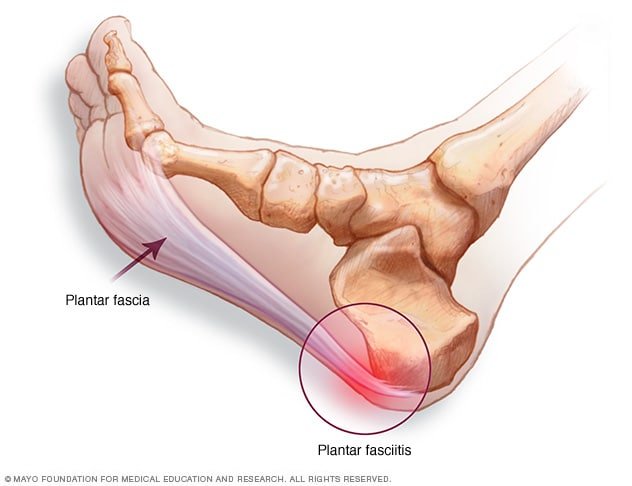 Image 3 of 3