Botox for excessive underarm sweating. Administered personally by Dr. Amir Mortazavi, MD.
Botox is FDA-approved for severe primary axillary hyperhidrosis — excessive underarm sweating not adequately controlled by prescription antiperspirant. This is one of its established medical indications, not an off-label aesthetic use.
It works by blocking the nerve signals that activate sweat glands. The glands remain intact; they simply stop being told to produce.
This is a functional problem, and it's worth saying so.
Hyperhidrosis isn't about being warm or nervous. It's sweating disproportionate to temperature and activity, and it affects what people wear, whether they raise their arms, how they shake hands, and how much of their day they spend managing it.
Patients often describe having built their wardrobe and their habits around it for years before learning there was a treatment.
This is the longest-lasting neurotoxin treatment offered here. Cosmetic treatment typically lasts three to four months. Underarm hyperhidrosis treatment commonly lasts four to six months, sometimes longer — often meaning two treatments a year rather than three or four.
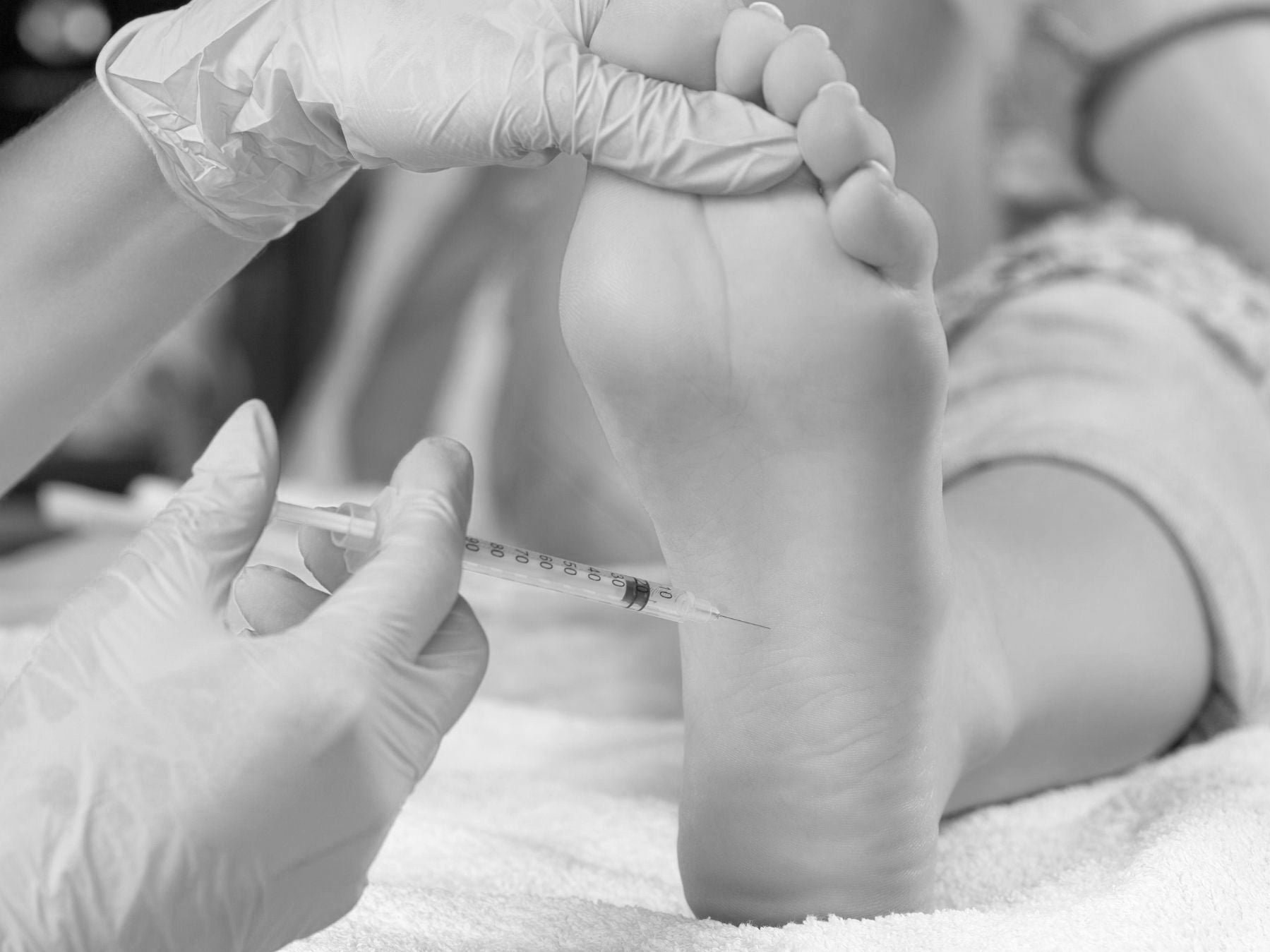
What to expect: the underarm is mapped, then a grid of small injections is placed across the sweating area. About 20 to 30 minutes with topical numbing. Some patients find the injections mildly uncomfortable rather than painful.
Onset is not immediate. Reduction typically begins within two to seven days and reaches full effect at about two weeks. Judging it in the first few days isn't useful.
Normal activity resumes the same day. Avoid strenuous exercise for 24 hours.
Common questions:
Will I sweat more elsewhere? Compensatory sweating in other areas is a recognized concern with surgical sympathectomy. It is not a typical finding with underarm neurotoxin treatment, which affects only the treated area.
Is it safe to stop sweating there? The underarms account for a very small fraction of total body sweat and thermoregulation. Blocking them does not impair your ability to cool.
Does deodorant still work? Yes, and most patients find they need far less of it, or stop using antiperspirant entirely.
Insurance. Many plans cover Botox for severe hyperhidrosis when criteria are met — typically documented severity and failure of prescription-strength antiperspirant. Plump Medical Spa does not bill insurance. If coverage is your priority, a dermatologist who bills directly is the more practical route, and Dr. Mortazavi will say so rather than steering you away from it.
Patients treat here for scheduling access, privacy, and continuity with a single physician.
Try prescription antiperspirant first if you haven't. Aluminum chloride formulations are inexpensive, effective for a meaningful proportion of patients, and are also what most insurers require you to have tried before covering anything else. If it hasn't worked for you, this is the next step.
Also treated: excessive sweating of the palms, soles, and scalp. Discuss at consultation.
Botox for excessive underarm sweating. Administered personally by Dr. Amir Mortazavi, MD.
Botox is FDA-approved for severe primary axillary hyperhidrosis — excessive underarm sweating not adequately controlled by prescription antiperspirant. This is one of its established medical indications, not an off-label aesthetic use.
It works by blocking the nerve signals that activate sweat glands. The glands remain intact; they simply stop being told to produce.
This is a functional problem, and it's worth saying so.
Hyperhidrosis isn't about being warm or nervous. It's sweating disproportionate to temperature and activity, and it affects what people wear, whether they raise their arms, how they shake hands, and how much of their day they spend managing it.
Patients often describe having built their wardrobe and their habits around it for years before learning there was a treatment.
This is the longest-lasting neurotoxin treatment offered here. Cosmetic treatment typically lasts three to four months. Underarm hyperhidrosis treatment commonly lasts four to six months, sometimes longer — often meaning two treatments a year rather than three or four.
What to expect: the underarm is mapped, then a grid of small injections is placed across the sweating area. About 20 to 30 minutes with topical numbing. Some patients find the injections mildly uncomfortable rather than painful.
Onset is not immediate. Reduction typically begins within two to seven days and reaches full effect at about two weeks. Judging it in the first few days isn't useful.
Normal activity resumes the same day. Avoid strenuous exercise for 24 hours.
Common questions:
Will I sweat more elsewhere? Compensatory sweating in other areas is a recognized concern with surgical sympathectomy. It is not a typical finding with underarm neurotoxin treatment, which affects only the treated area.
Is it safe to stop sweating there? The underarms account for a very small fraction of total body sweat and thermoregulation. Blocking them does not impair your ability to cool.
Does deodorant still work? Yes, and most patients find they need far less of it, or stop using antiperspirant entirely.
Insurance. Many plans cover Botox for severe hyperhidrosis when criteria are met — typically documented severity and failure of prescription-strength antiperspirant. Plump Medical Spa does not bill insurance. If coverage is your priority, a dermatologist who bills directly is the more practical route, and Dr. Mortazavi will say so rather than steering you away from it.
Patients treat here for scheduling access, privacy, and continuity with a single physician.
Try prescription antiperspirant first if you haven't. Aluminum chloride formulations are inexpensive, effective for a meaningful proportion of patients, and are also what most insurers require you to have tried before covering anything else. If it hasn't worked for you, this is the next step.
Also treated: excessive sweating of the palms, soles, and scalp. Discuss at consultation.
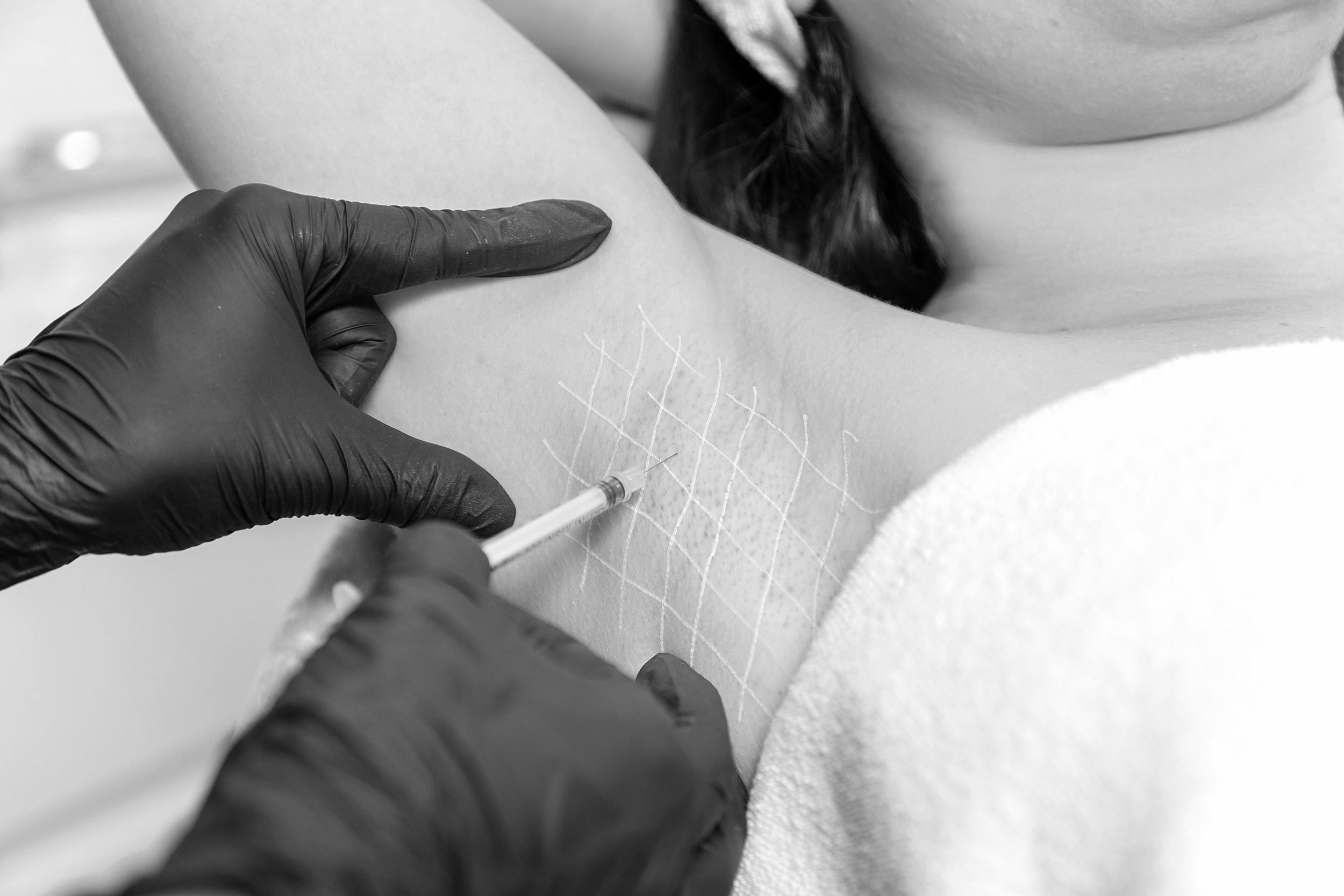 Image 1 of 1