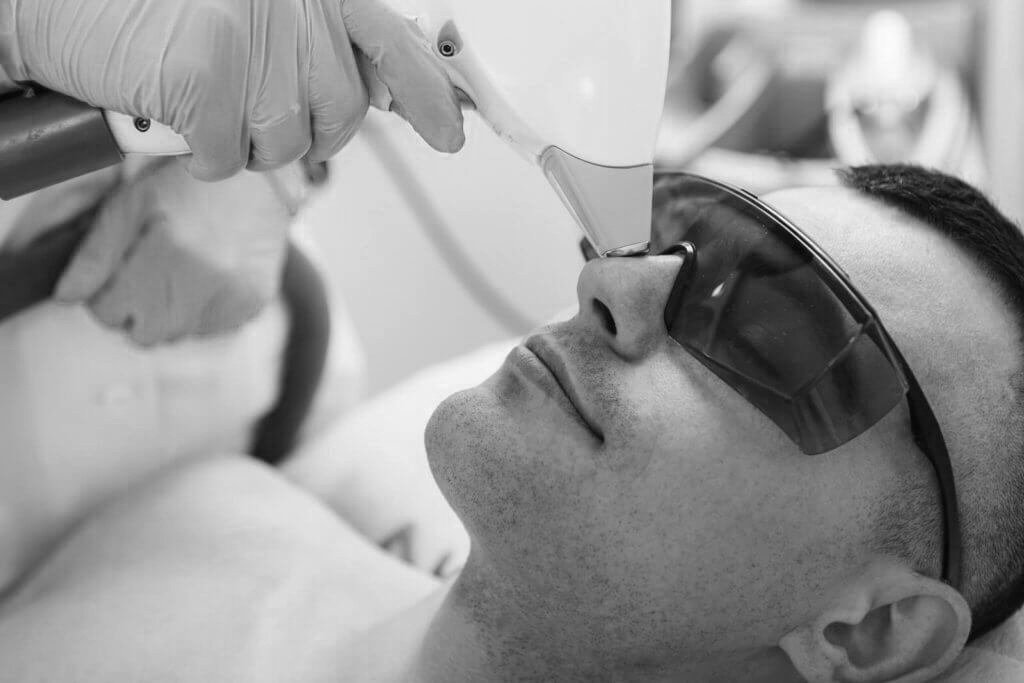
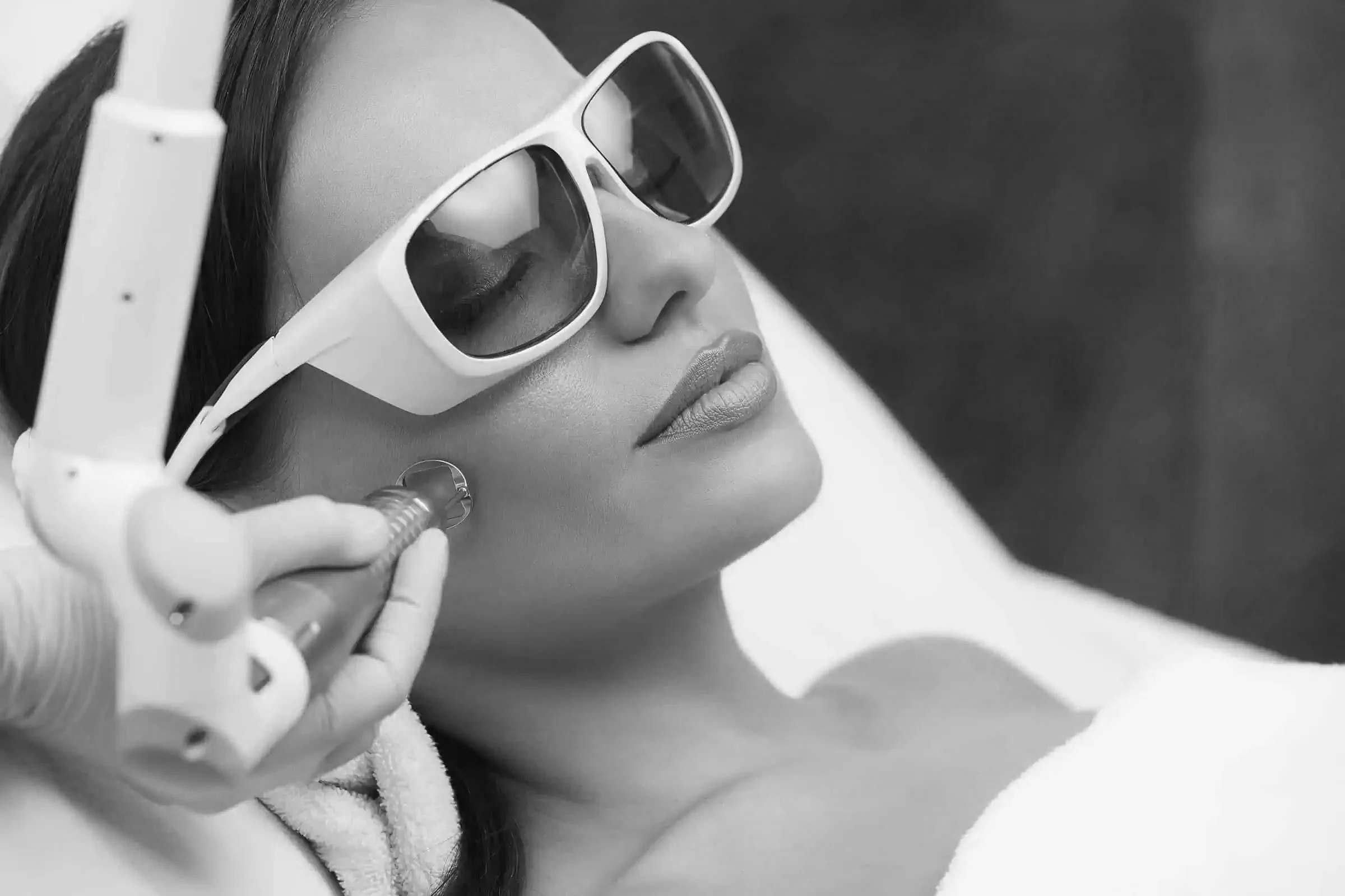
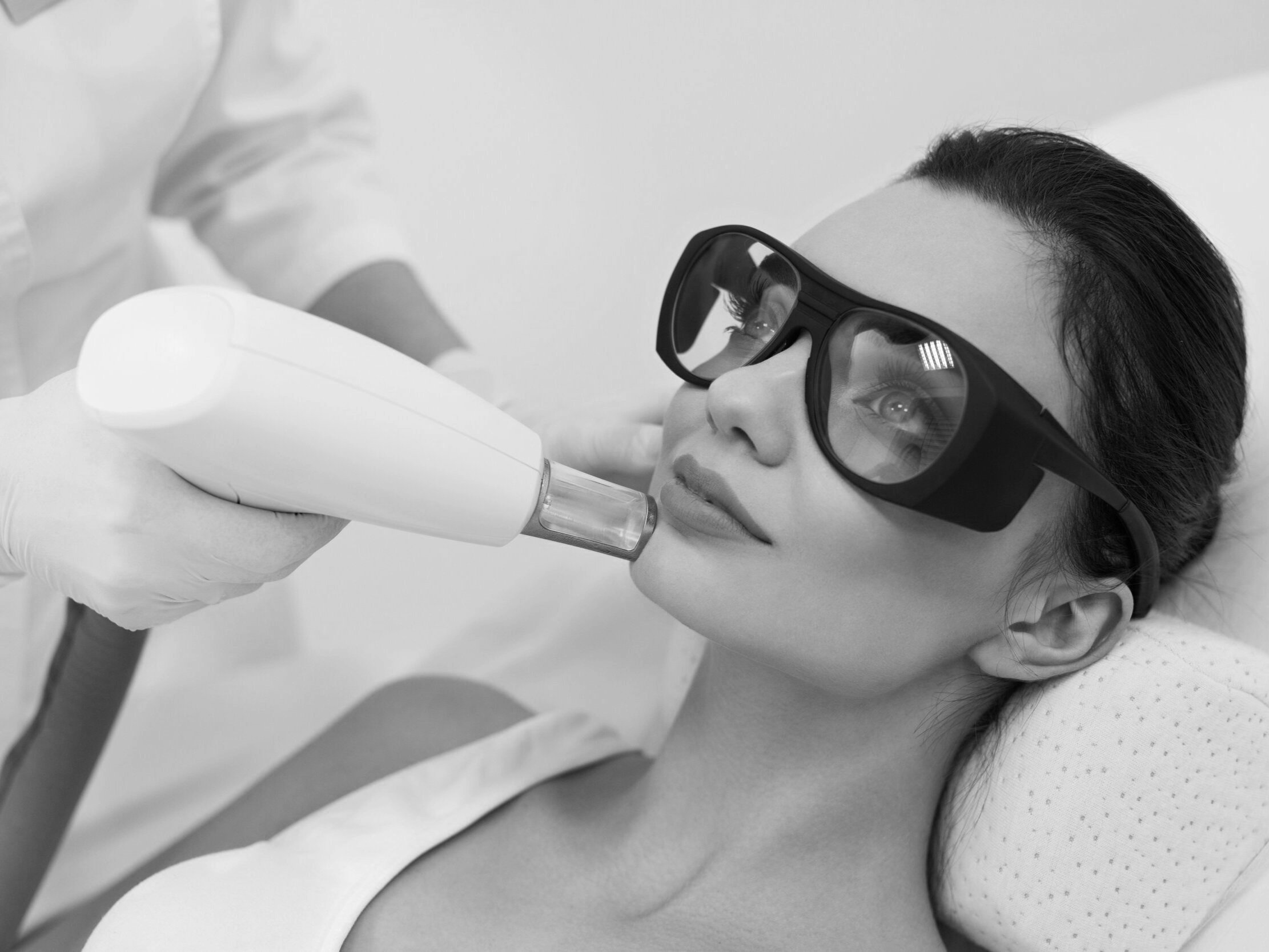
Intense pulsed light treatment, performed personally by Dr. Amir Mortazavi, MD.
IPL isn't a laser. It delivers broad-spectrum light across a range of wavelengths, filtered to target two things simultaneously: melanin in brown spots and hemoglobin in visible vessels.
That dual action is what makes it distinctive. One treatment addresses both the brown and the red components of sun-damaged skin, which no single-target device does.
✨ Package of 3 treatments: $1200 ✨
Best for: diffuse facial redness · rosacea-related flushing and visible vessels · broken capillaries across the cheeks and nose · scattered sun spots and freckling · overall tone and clarity · combined red-and-brown sun damage.
IPL is not appropriate for every skin tone, and that's the most important thing on this page.
Because IPL targets melanin with light and heat, it cannot distinguish well between pigment in a sun spot and pigment in the surrounding skin. In deeper skin tones this carries a real risk of burns, hypopigmentation, and paradoxical darkening — the treatment producing the problem it was meant to fix.
IPL is generally appropriate for Fitzpatrick I–III and treated with significant caution above that.
If you have a deeper skin tone, or if you're tanned, Pico laser is the safer option — it works photoacoustically rather than thermally and can be used across a much broader range of skin types.
Skin type is assessed before treatment. Dr. Mortazavi will decline to treat with IPL where it isn't appropriate rather than proceeding with conservative settings and hoping.
Do not have IPL on recently tanned skin. That includes sun exposure and self-tanner. Tanned skin has more melanin available to absorb the light, which substantially raises the risk of a burn. Wait until the tan has fully faded — typically several weeks.
IPL or Pico?
IPL — best for diffuse redness and combined red-and-brown damage across a broad area. Lighter skin tones.
Pico — better for discrete pigmented lesions, melasma, and any patient where pigmentation risk is a concern. Safe across a much broader range of skin tones.
For individual vessels rather than diffuse redness — a single broken capillary or spider vein — Nd:YAG vascular laser is more precise than IPL.
Dr. Mortazavi will tell you which your skin actually calls for.
What to expect: 20 to 30 minutes. Expect a snapping sensation, sometimes described as a rubber band. Mild redness and warmth afterward, usually settling within hours.
Treated brown spots darken over the following days before flaking away — expected, not a complication. Most patients are presentable immediately, though the darkening phase is visible for about a week.
Plan on a series — typically three to five sessions spaced three to four weeks apart.
On rosacea: IPL reduces the visible vessel component and improves flushing for many patients. It does not treat the underlying condition, which is chronic and needs ongoing management. Improvement is real; cure isn't the goal.
Intense pulsed light treatment, performed personally by Dr. Amir Mortazavi, MD.
IPL isn't a laser. It delivers broad-spectrum light across a range of wavelengths, filtered to target two things simultaneously: melanin in brown spots and hemoglobin in visible vessels.
That dual action is what makes it distinctive. One treatment addresses both the brown and the red components of sun-damaged skin, which no single-target device does.
✨ Package of 3 treatments: $1200 ✨
Best for: diffuse facial redness · rosacea-related flushing and visible vessels · broken capillaries across the cheeks and nose · scattered sun spots and freckling · overall tone and clarity · combined red-and-brown sun damage.
IPL is not appropriate for every skin tone, and that's the most important thing on this page.
Because IPL targets melanin with light and heat, it cannot distinguish well between pigment in a sun spot and pigment in the surrounding skin. In deeper skin tones this carries a real risk of burns, hypopigmentation, and paradoxical darkening — the treatment producing the problem it was meant to fix.
IPL is generally appropriate for Fitzpatrick I–III and treated with significant caution above that.
If you have a deeper skin tone, or if you're tanned, Pico laser is the safer option — it works photoacoustically rather than thermally and can be used across a much broader range of skin types.
Skin type is assessed before treatment. Dr. Mortazavi will decline to treat with IPL where it isn't appropriate rather than proceeding with conservative settings and hoping.
Do not have IPL on recently tanned skin. That includes sun exposure and self-tanner. Tanned skin has more melanin available to absorb the light, which substantially raises the risk of a burn. Wait until the tan has fully faded — typically several weeks.
IPL or Pico?
IPL — best for diffuse redness and combined red-and-brown damage across a broad area. Lighter skin tones.
Pico — better for discrete pigmented lesions, melasma, and any patient where pigmentation risk is a concern. Safe across a much broader range of skin tones.
For individual vessels rather than diffuse redness — a single broken capillary or spider vein — Nd:YAG vascular laser is more precise than IPL.
Dr. Mortazavi will tell you which your skin actually calls for.
What to expect: 20 to 30 minutes. Expect a snapping sensation, sometimes described as a rubber band. Mild redness and warmth afterward, usually settling within hours.
Treated brown spots darken over the following days before flaking away — expected, not a complication. Most patients are presentable immediately, though the darkening phase is visible for about a week.
Plan on a series — typically three to five sessions spaced three to four weeks apart.
On rosacea: IPL reduces the visible vessel component and improves flushing for many patients. It does not treat the underlying condition, which is chronic and needs ongoing management. Improvement is real; cure isn't the goal.
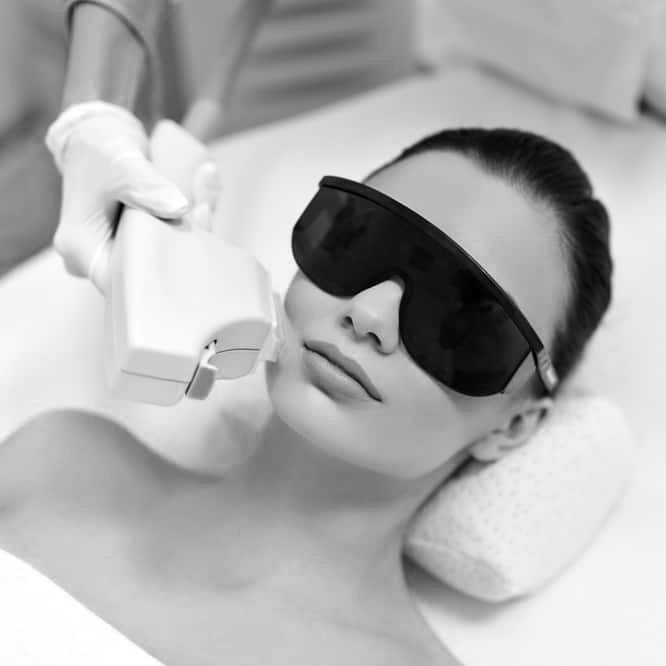 Image 1 of 1