New to Pico laser? Read the full guide to Pico laser in Newport Beach before booking.
Pico laser correction of unwanted eyebrow pigment. Performed personally by Dr. Amir Mortazavi, MD.
Microblading, powder brows, ombré brows, and traditional eyebrow tattooing all place pigment into the skin. When the shape is wrong, the color has shifted, or it simply hasn't faded the way it was supposed to, laser is how it comes out.
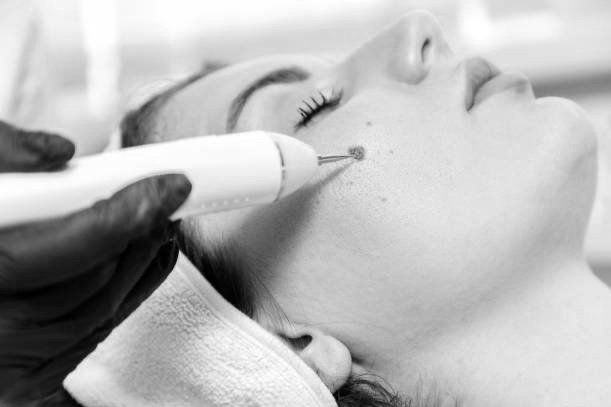
Pico laser delivers energy in picosecond pulses — trillionths of a second — which shatters pigment mechanically rather than heating it. Less thermal load matters a great deal in this area, where the skin is thin, the eye is close, and heat-driven complications affect a highly visible part of the face.
Two different goals, and it's worth knowing which is yours:
Lightening for a cover-up. Most patients don't want the brow gone — they want it faded enough that a technician can rework the shape or correct the color. This usually takes fewer sessions than full removal.
Complete removal. Taking the pigment out entirely. More sessions, and the endpoint depends heavily on the pigment used.
Tell Dr. Mortazavi which you're after at consultation — the treatment plan differs.
What determines how many sessions you need.
Cosmetic tattoo pigments are far less predictable than body tattoo ink. Composition varies widely between brands and technicians, and the original artist's product is usually unknown.
Depth — microblading sits more superficially than traditional tattooing and generally clears faster.
Pigment colour — dark brown and black respond well. Reds, oranges, and warm tones are more stubborn.
Age — older work that's already faded needs less.
Layering — brows tattooed multiple times over the years take longer.
Most patients need several sessions spaced six to eight weeks apart. Anyone quoting you a fixed number before seeing the brow is guessing.
Important: some pigments darken on first exposure.
Certain cosmetic tattoo pigments — particularly those containing iron oxide or titanium dioxide, common in lighter and warmer shades — can oxidise and turn darker or grey when lasered. This is a known and documented reaction, not an error.
It's usually reversible with continued treatment, but it can be alarming if nobody warned you.
This is why a test spot is done first on any brow where pigment composition is uncertain — a small area treated and observed before committing to the full brow. Any practice that lasers a full set of brows without test-spotting unknown pigment is taking a risk with your face rather than their own.
What to expect: each session takes minutes. Expect frosting immediately after, then darkening and scabbing over several days as pigment works its way out. Do not pick the scabs — that's the main cause of a mark that lingers.
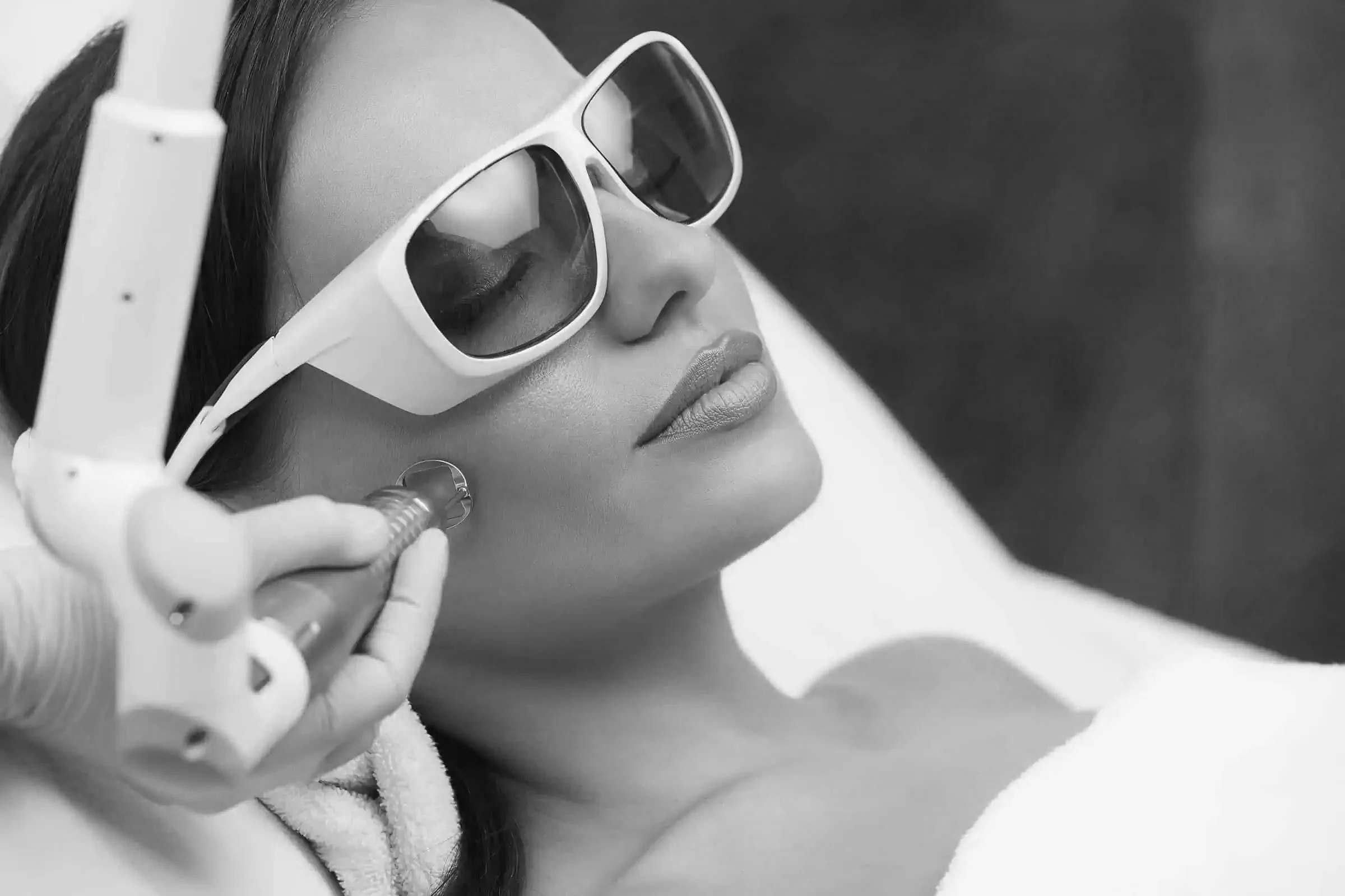
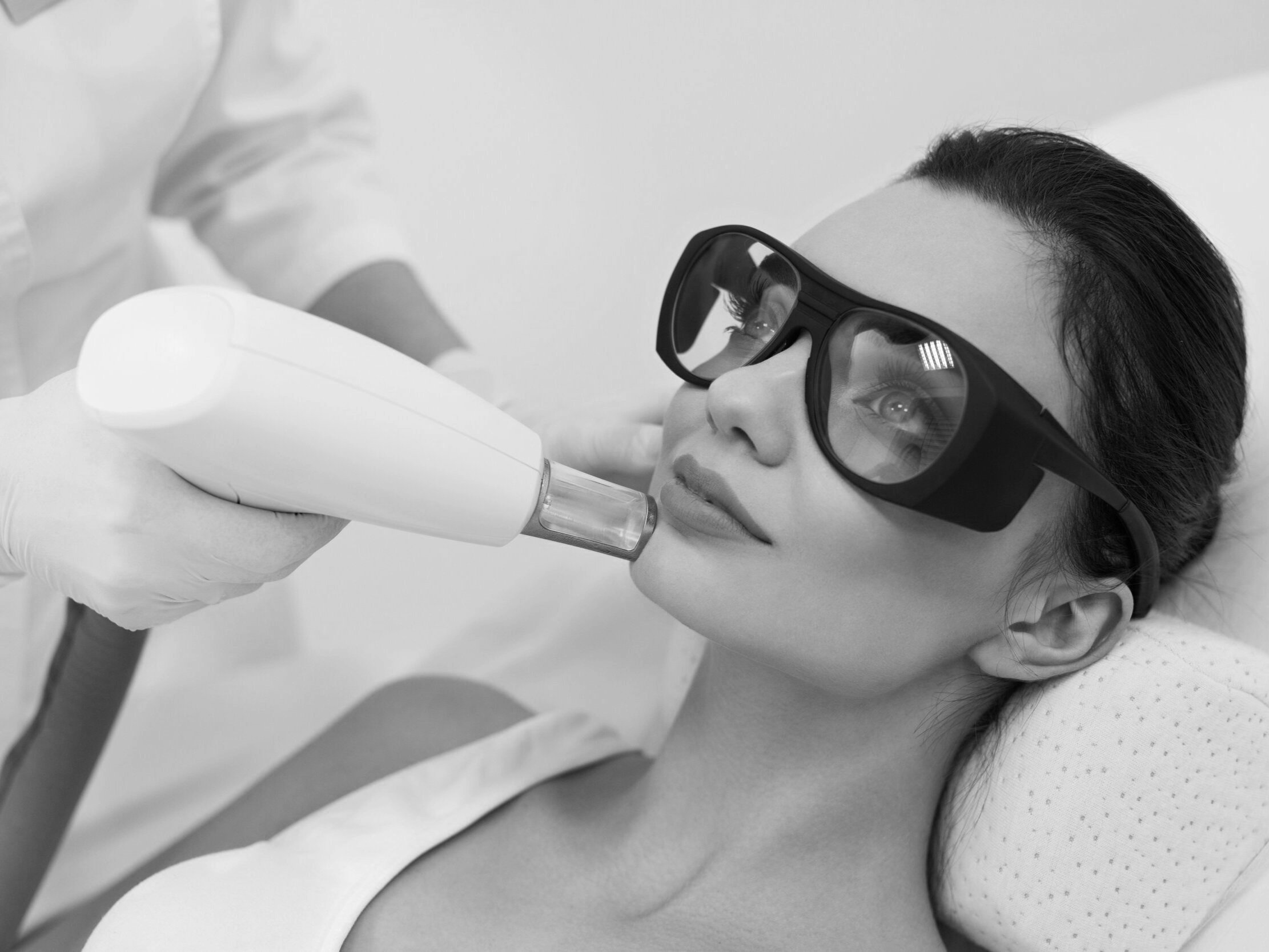
Eye protection is used throughout given the proximity to the eye.
Realistic outcome: significant lightening is achievable for most brows. Complete removal is achievable for many but not all — some pigments retain a faint shadow. Dr. Mortazavi will give you a realistic assessment after the test spot rather than a promise beforehand.
New to Pico laser? Read the full guide to Pico laser in Newport Beach before booking.
Pico laser correction of unwanted eyebrow pigment. Performed personally by Dr. Amir Mortazavi, MD.
Microblading, powder brows, ombré brows, and traditional eyebrow tattooing all place pigment into the skin. When the shape is wrong, the color has shifted, or it simply hasn't faded the way it was supposed to, laser is how it comes out.
Pico laser delivers energy in picosecond pulses — trillionths of a second — which shatters pigment mechanically rather than heating it. Less thermal load matters a great deal in this area, where the skin is thin, the eye is close, and heat-driven complications affect a highly visible part of the face.
Two different goals, and it's worth knowing which is yours:
Lightening for a cover-up. Most patients don't want the brow gone — they want it faded enough that a technician can rework the shape or correct the color. This usually takes fewer sessions than full removal.
Complete removal. Taking the pigment out entirely. More sessions, and the endpoint depends heavily on the pigment used.
Tell Dr. Mortazavi which you're after at consultation — the treatment plan differs.
What determines how many sessions you need.
Cosmetic tattoo pigments are far less predictable than body tattoo ink. Composition varies widely between brands and technicians, and the original artist's product is usually unknown.
Depth — microblading sits more superficially than traditional tattooing and generally clears faster.
Pigment colour — dark brown and black respond well. Reds, oranges, and warm tones are more stubborn.
Age — older work that's already faded needs less.
Layering — brows tattooed multiple times over the years take longer.
Most patients need several sessions spaced six to eight weeks apart. Anyone quoting you a fixed number before seeing the brow is guessing.
Important: some pigments darken on first exposure.
Certain cosmetic tattoo pigments — particularly those containing iron oxide or titanium dioxide, common in lighter and warmer shades — can oxidise and turn darker or grey when lasered. This is a known and documented reaction, not an error.
It's usually reversible with continued treatment, but it can be alarming if nobody warned you.
This is why a test spot is done first on any brow where pigment composition is uncertain — a small area treated and observed before committing to the full brow. Any practice that lasers a full set of brows without test-spotting unknown pigment is taking a risk with your face rather than their own.
What to expect: each session takes minutes. Expect frosting immediately after, then darkening and scabbing over several days as pigment works its way out. Do not pick the scabs — that's the main cause of a mark that lingers.
Eye protection is used throughout given the proximity to the eye.
Realistic outcome: significant lightening is achievable for most brows. Complete removal is achievable for many but not all — some pigments retain a faint shadow. Dr. Mortazavi will give you a realistic assessment after the test spot rather than a promise beforehand.
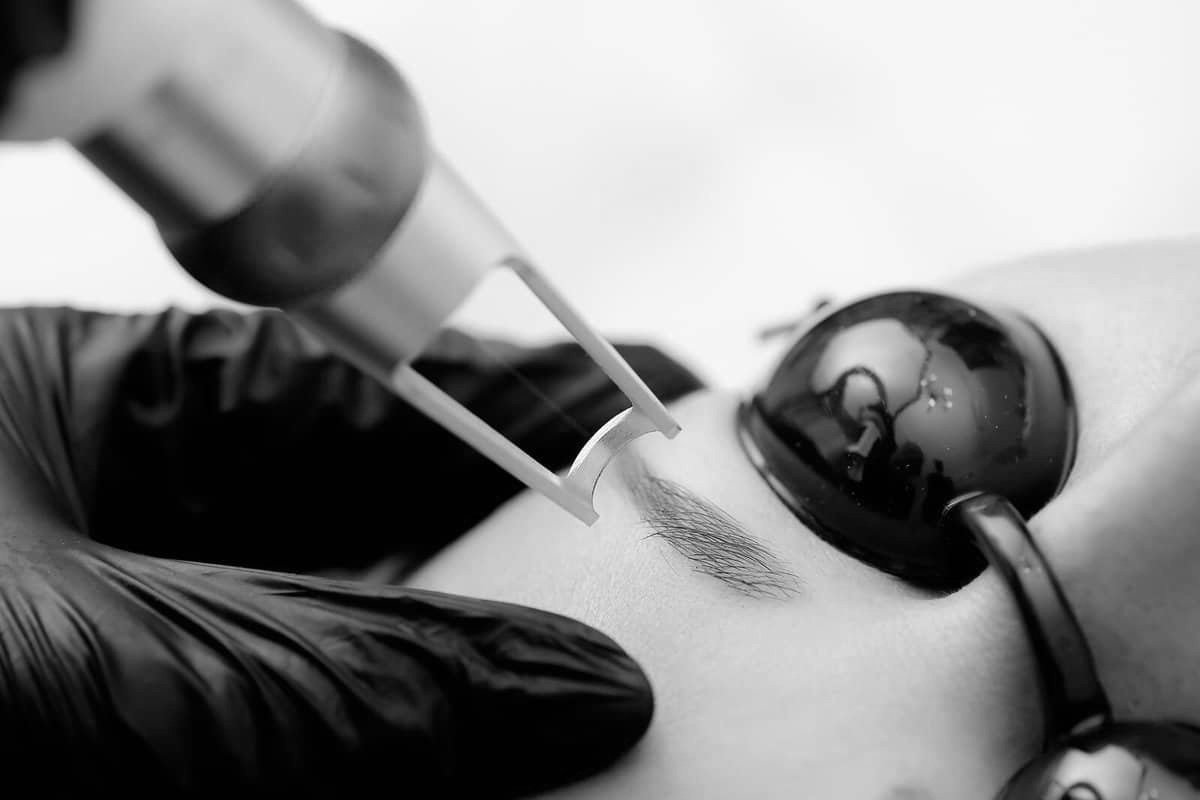 Image 1 of 1