Slimming or definition? Read jawline filler vs. masseter Botox — they do opposite things.
Neurotoxin into the masseter muscle, injected personally by Dr. Amir Mortazavi, MD.
The masseter is the primary chewing muscle, running from the cheekbone to the angle of the jaw. Like any muscle, it enlarges with use — and clenching, grinding, chewing gum, or simple genetics can leave it substantially overdeveloped.
Relaxing it does two things at once, and most patients want both.
The functional reason: clenching and grinding.
Bruxism produces jaw pain, morning tightness, tooth wear, headaches originating at the temples, and TMJ discomfort. A night guard protects the teeth but doesn't reduce the force. Masseter treatment reduces the force itself.
Many patients report improvement in jaw pain and morning tension within a few weeks, alongside fewer tension headaches.
The aesthetic reason: jaw width.
An overdeveloped masseter widens the lower face and squares the jaw angle. As the muscle reduces in volume over subsequent weeks, the lower face narrows and the jawline reads as more tapered.
Important: slimming and definition are opposite goals.
Masseter Botox makes the lower face narrower. Jawline filler makes it sharper and more defined.
If your complaint is a soft or undefined jawline, this is the wrong treatment — it will make it less defined, not more. If your complaint is width or bulk, this is the right one.
Some patients need both: masseter to reduce width, filler to define the border. That's assessed rather than assumed.
What to expect: injections take a few minutes per side. Onset is gradual — you'll notice reduced clenching force within one to two weeks, but visible slimming develops over one to three months as the muscle reduces in size. This is not a same-week aesthetic change.
Duration is typically four to six months, often longer than facial cosmetic areas. With repeated treatment, results tend to last progressively longer as the muscle stays reduced.
Mild chewing fatigue with tough or chewy foods in the first few weeks is common and resolves. Normal eating is unaffected at appropriate dosing.
On dosing. Under-dosing is the most common reason patients feel masseter treatment didn't work — the masseter is a large, strong muscle and requires meaningfully more product than facial expression areas.
Over-dosing has its own consequences: excessive weakening can cause noticeable chewing difficulty, and in some patients a hollowing at the cheek as the muscle bulk reduces more than intended.
Getting that balance right for your muscle mass and goals is the treatment. It's performed by Dr. Mortazavi personally.
Slimming or definition? Read jawline filler vs. masseter Botox — they do opposite things.
Neurotoxin into the masseter muscle, injected personally by Dr. Amir Mortazavi, MD.
The masseter is the primary chewing muscle, running from the cheekbone to the angle of the jaw. Like any muscle, it enlarges with use — and clenching, grinding, chewing gum, or simple genetics can leave it substantially overdeveloped.
Relaxing it does two things at once, and most patients want both.
The functional reason: clenching and grinding.
Bruxism produces jaw pain, morning tightness, tooth wear, headaches originating at the temples, and TMJ discomfort. A night guard protects the teeth but doesn't reduce the force. Masseter treatment reduces the force itself.
Many patients report improvement in jaw pain and morning tension within a few weeks, alongside fewer tension headaches.
The aesthetic reason: jaw width.
An overdeveloped masseter widens the lower face and squares the jaw angle. As the muscle reduces in volume over subsequent weeks, the lower face narrows and the jawline reads as more tapered.
Important: slimming and definition are opposite goals.
Masseter Botox makes the lower face narrower. Jawline filler makes it sharper and more defined.
If your complaint is a soft or undefined jawline, this is the wrong treatment — it will make it less defined, not more. If your complaint is width or bulk, this is the right one.
Some patients need both: masseter to reduce width, filler to define the border. That's assessed rather than assumed.
What to expect: injections take a few minutes per side. Onset is gradual — you'll notice reduced clenching force within one to two weeks, but visible slimming develops over one to three months as the muscle reduces in size. This is not a same-week aesthetic change.
Duration is typically four to six months, often longer than facial cosmetic areas. With repeated treatment, results tend to last progressively longer as the muscle stays reduced.
Mild chewing fatigue with tough or chewy foods in the first few weeks is common and resolves. Normal eating is unaffected at appropriate dosing.
On dosing. Under-dosing is the most common reason patients feel masseter treatment didn't work — the masseter is a large, strong muscle and requires meaningfully more product than facial expression areas.
Over-dosing has its own consequences: excessive weakening can cause noticeable chewing difficulty, and in some patients a hollowing at the cheek as the muscle bulk reduces more than intended.
Getting that balance right for your muscle mass and goals is the treatment. It's performed by Dr. Mortazavi personally.
 Image 1 of 2
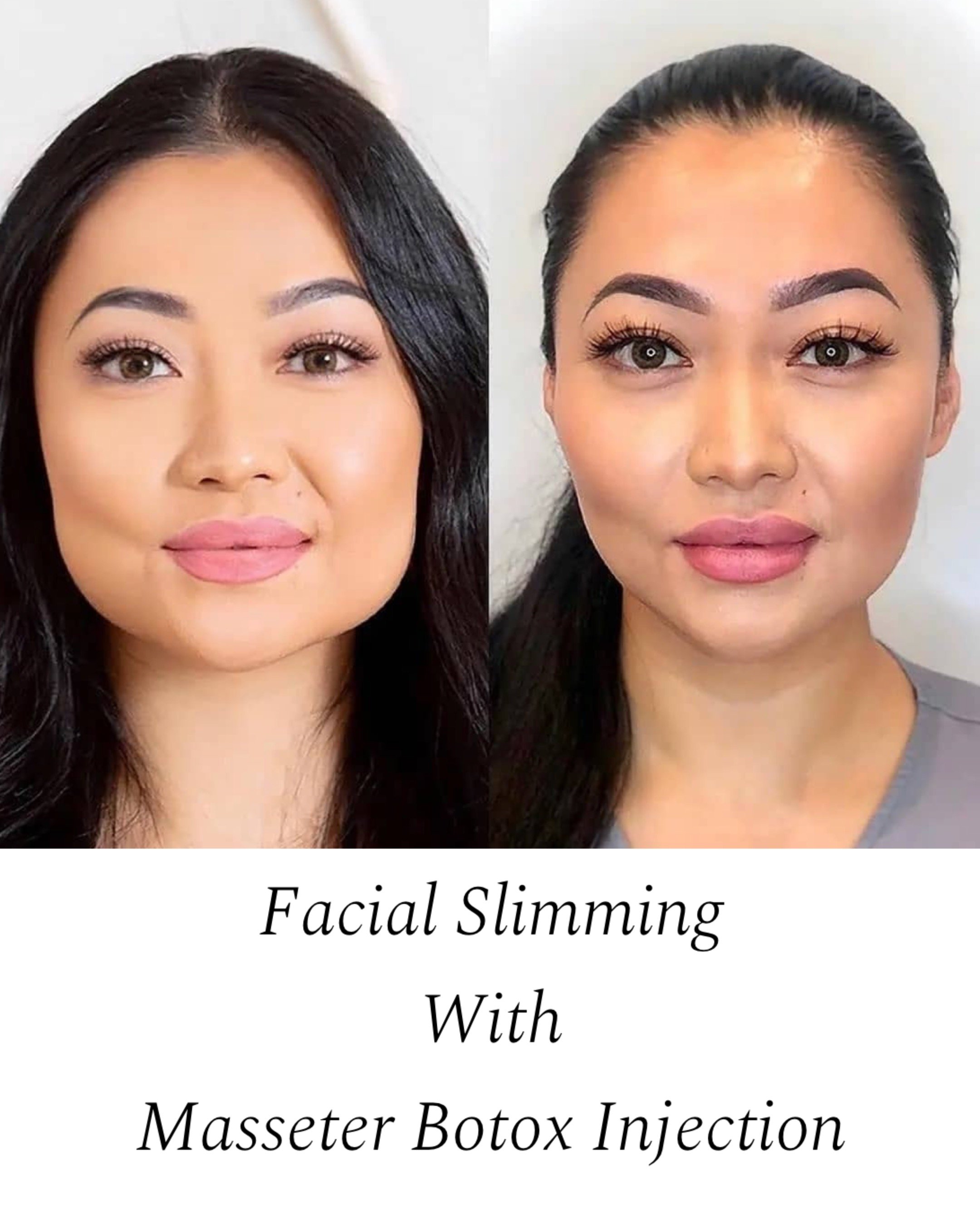 Image 2 of 2