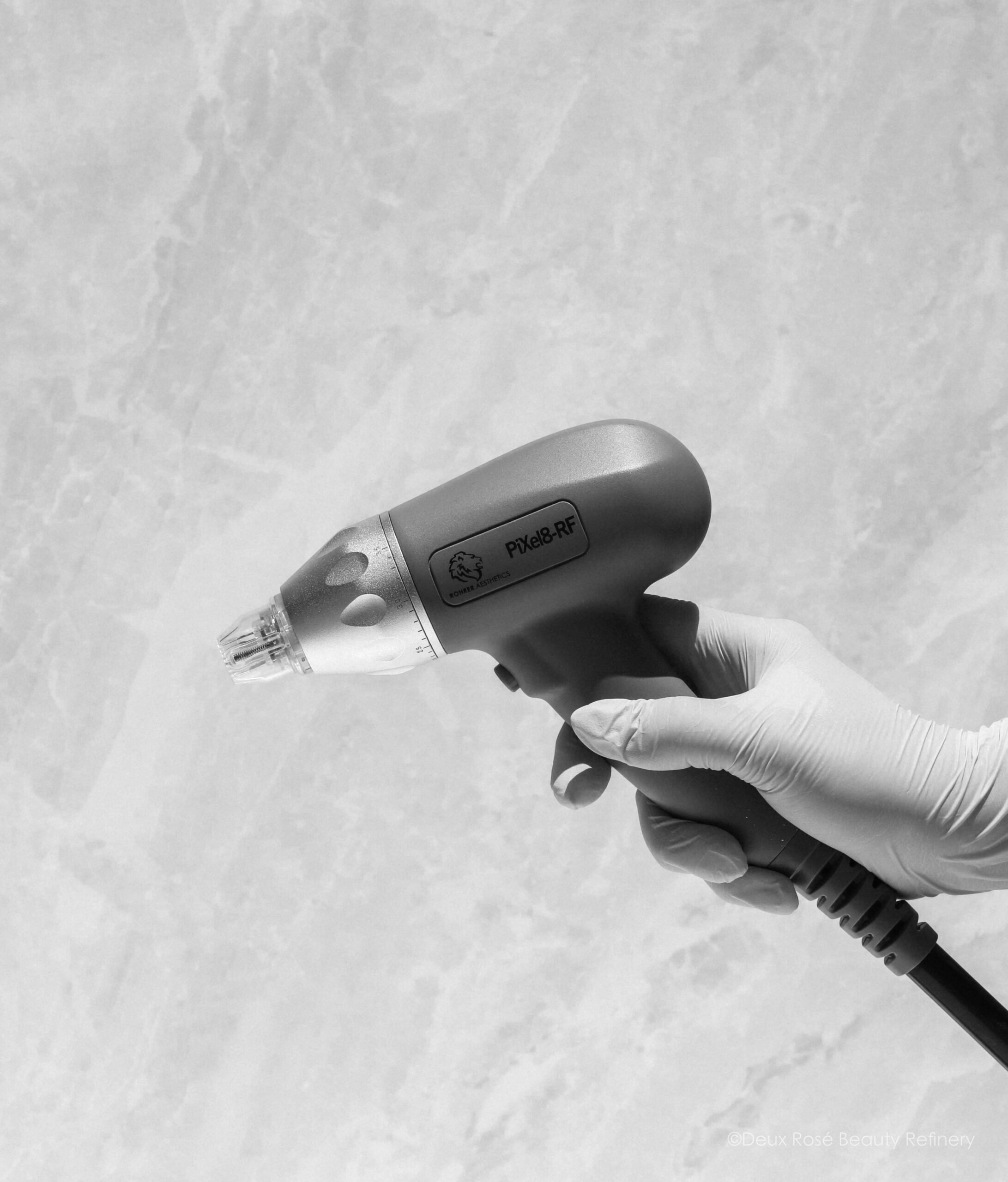
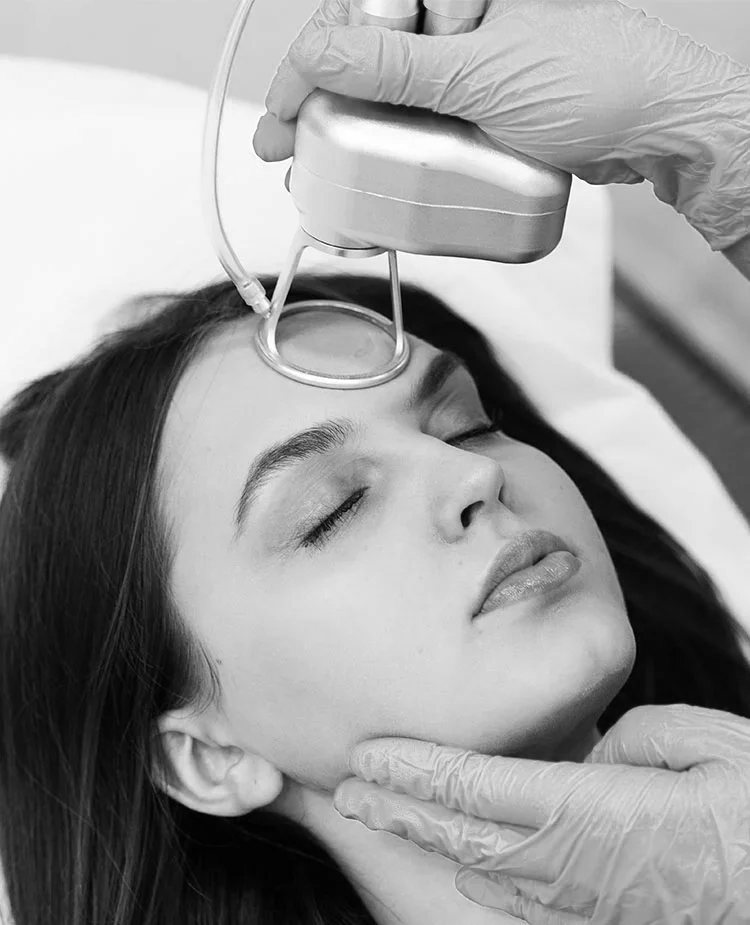
Microneedling with SkinPen, performed personally by Dr. Amir Mortazavi, MD.
Fine needles create thousands of controlled micro-injuries in the skin. Your body responds by producing new collagen and elastin during repair — the same wound-healing cascade that builds scar tissue, deliberately triggered at a scale too small to scar.
No heat, no light, no ablation. Purely mechanical, which is what gives it the widest safety margin of any collagen-induction treatment.
✨ Package of 3 treatments: $900 ✨
Treats: rough or uneven texture · enlarged pore appearance · fine lines · mild acne scarring · early skin quality decline · overall tone and firmness
Select your course:
1 treatment — a single session, appropriate for maintenance or a pre-event refresh.
3 treatments — the standard course. Collagen builds cumulatively, and a single session on established concerns will underdeliver.
Where microneedling fits among your options.
Microneedling — mechanical only, minimal downtime, safest across all skin tones, gentlest results. Best for early texture concerns and maintenance.
RF microneedling — adds radiofrequency energy at depth. Meaningfully stronger for laxity and deeper remodeling, with more downtime.
Microneedling + CO2 — adds ablative resurfacing on top. Strongest option, most recovery.
The gentler option is often the right one. If your concern is early texture change and you can't accommodate downtime, this is the correct treatment — not a lesser version of something better. Dr. Mortazavi will tell you if you'd get more from a stronger modality, and equally if you wouldn't.
The strongest argument for microneedling: skin tone safety.
Because there's no heat or light involved, microneedling carries substantially lower risk of post-inflammatory hyperpigmentation than laser or energy-based treatments. For deeper Fitzpatrick skin types — where ablative resurfacing carries real pigmentation risk — this is frequently the safest effective option available.
What to expect: 30 to 45 minutes with topical numbing. Expect redness resembling a moderate sunburn for 24 to 48 hours, occasionally with mild swelling on day one. Most patients are presentable by day two, and makeup can typically go on the following day.
Results build over weeks as collagen develops. Meaningful change from a series takes about three months — collagen remodeling isn't fast, and judging it at four weeks isn't useful.
Not appropriate with active acne, active infection, or recent isotretinoin use.
On at-home devices. Home dermarollers don't penetrate to the depth required for collagen induction, and they carry real infection risk with repeated use on an unsterile device. They aren't a lower-cost version of this treatment — they're a different thing that mostly doesn't work.
Microneedling with SkinPen, performed personally by Dr. Amir Mortazavi, MD.
Fine needles create thousands of controlled micro-injuries in the skin. Your body responds by producing new collagen and elastin during repair — the same wound-healing cascade that builds scar tissue, deliberately triggered at a scale too small to scar.
No heat, no light, no ablation. Purely mechanical, which is what gives it the widest safety margin of any collagen-induction treatment.
✨ Package of 3 treatments: $900 ✨
Treats: rough or uneven texture · enlarged pore appearance · fine lines · mild acne scarring · early skin quality decline · overall tone and firmness
Select your course:
1 treatment — a single session, appropriate for maintenance or a pre-event refresh.
3 treatments — the standard course. Collagen builds cumulatively, and a single session on established concerns will underdeliver.
Where microneedling fits among your options.
Microneedling — mechanical only, minimal downtime, safest across all skin tones, gentlest results. Best for early texture concerns and maintenance.
RF microneedling — adds radiofrequency energy at depth. Meaningfully stronger for laxity and deeper remodeling, with more downtime.
Microneedling + CO2 — adds ablative resurfacing on top. Strongest option, most recovery.
The gentler option is often the right one. If your concern is early texture change and you can't accommodate downtime, this is the correct treatment — not a lesser version of something better. Dr. Mortazavi will tell you if you'd get more from a stronger modality, and equally if you wouldn't.
The strongest argument for microneedling: skin tone safety.
Because there's no heat or light involved, microneedling carries substantially lower risk of post-inflammatory hyperpigmentation than laser or energy-based treatments. For deeper Fitzpatrick skin types — where ablative resurfacing carries real pigmentation risk — this is frequently the safest effective option available.
What to expect: 30 to 45 minutes with topical numbing. Expect redness resembling a moderate sunburn for 24 to 48 hours, occasionally with mild swelling on day one. Most patients are presentable by day two, and makeup can typically go on the following day.
Results build over weeks as collagen develops. Meaningful change from a series takes about three months — collagen remodeling isn't fast, and judging it at four weeks isn't useful.
Not appropriate with active acne, active infection, or recent isotretinoin use.
On at-home devices. Home dermarollers don't penetrate to the depth required for collagen induction, and they carry real infection risk with repeated use on an unsterile device. They aren't a lower-cost version of this treatment — they're a different thing that mostly doesn't work.
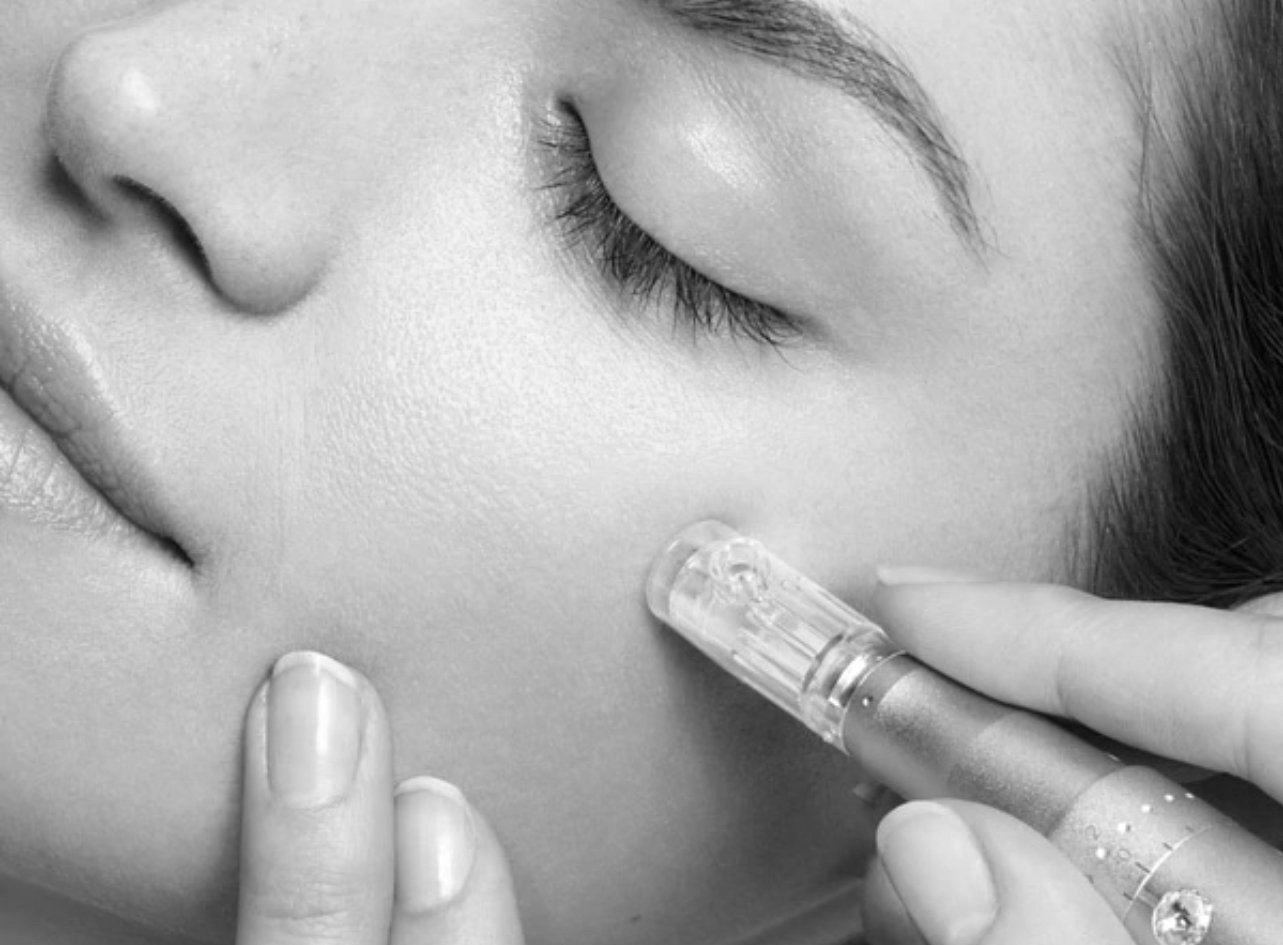 Image 1 of 1