New to Sculptra? Read the full guide to Sculptra in Newport Beach before booking.
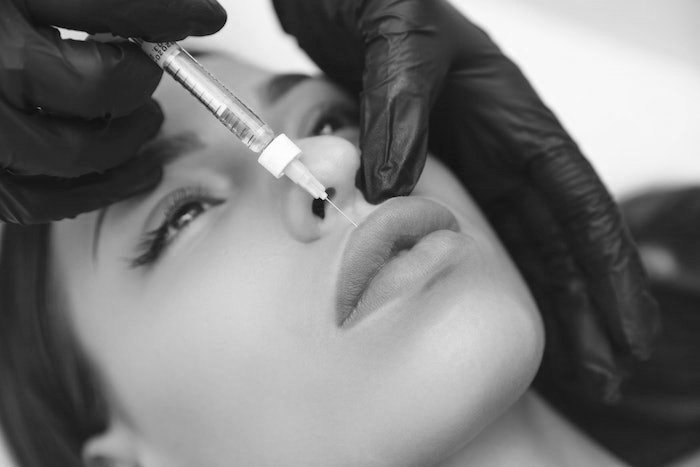
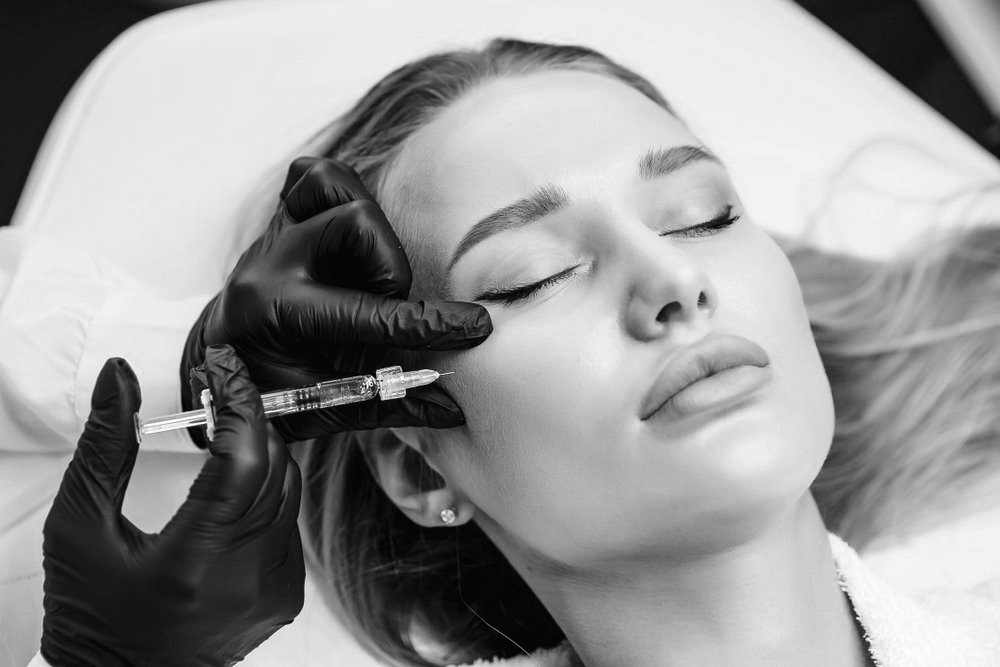
Restoration of temple hollowing using Sculptra, injected personally by Dr. Amir Mortazavi, MD.
The temples are among the first areas to show volume loss and among the last patients think to treat. As fat and bone diminish here, the outer edge of the face narrows above the cheekbone — which makes the eyes look more sunken, the brow appear to descend, and the whole upper face read as tired.
Most people notice the effect without identifying the cause. They see aging around the eyes and assume the eyes are the problem, when what changed was the frame around them.
Why Sculptra rather than filler here.
The temple is a broad, gently curved area — restoring it well is about diffuse support across a region rather than precise volume in one spot. Sculptra suits that: it stimulates your own collagen to rebuild gradually across the whole area, producing a smooth restoration rather than a placed volume.
It also builds tissue thickness, which matters in the temple specifically. Skin here is thin, and adding volume beneath thin tissue can look obvious. Building the tissue itself produces a more natural result.
The trade-off is time. Filler shows immediately; Sculptra takes months. Patients wanting same-day change should know that going in.
Restoring the temples often improves things patients came in about for other reasons: the eyes look more open, the brow position appears lifted, the upper face looks less drawn, and the transition from cheekbone to hairline becomes continuous rather than stepped.
This is one of the more common examples of the area that bothers you not being the area that needs treatment. Assessed as part of facial balancing where multiple areas are involved.
The temple is anatomically demanding. Significant vasculature runs through this region, and it is one of the higher-risk injection sites on the face. Depth and plane are not optional details — they're the treatment. Combined with the fact that Sculptra cannot be dissolved, this is among the strongest reasons temple work shouldn't be delegated to a nurse injector.
What to expect: 20 to 30 minutes with numbing. Immediately after, the temples may look fuller from injection fluid — that resolves within days and is not your result.
Collagen builds over 6 to 12 weeks per session. Most patients need two to three sessions spaced four to six weeks apart, with the full result visible several months after the last. Duration is typically two years or longer.
Massage protocol matters. Post-treatment massage affects the outcome and reduces nodule risk — full instructions on the Sculptra aftercare page.
New to Sculptra? Read the full guide to Sculptra in Newport Beach before booking.
Restoration of temple hollowing using Sculptra, injected personally by Dr. Amir Mortazavi, MD.
The temples are among the first areas to show volume loss and among the last patients think to treat. As fat and bone diminish here, the outer edge of the face narrows above the cheekbone — which makes the eyes look more sunken, the brow appear to descend, and the whole upper face read as tired.
Most people notice the effect without identifying the cause. They see aging around the eyes and assume the eyes are the problem, when what changed was the frame around them.
Why Sculptra rather than filler here.
The temple is a broad, gently curved area — restoring it well is about diffuse support across a region rather than precise volume in one spot. Sculptra suits that: it stimulates your own collagen to rebuild gradually across the whole area, producing a smooth restoration rather than a placed volume.
It also builds tissue thickness, which matters in the temple specifically. Skin here is thin, and adding volume beneath thin tissue can look obvious. Building the tissue itself produces a more natural result.
The trade-off is time. Filler shows immediately; Sculptra takes months. Patients wanting same-day change should know that going in.
Restoring the temples often improves things patients came in about for other reasons: the eyes look more open, the brow position appears lifted, the upper face looks less drawn, and the transition from cheekbone to hairline becomes continuous rather than stepped.
This is one of the more common examples of the area that bothers you not being the area that needs treatment. Assessed as part of facial balancing where multiple areas are involved.
The temple is anatomically demanding. Significant vasculature runs through this region, and it is one of the higher-risk injection sites on the face. Depth and plane are not optional details — they're the treatment. Combined with the fact that Sculptra cannot be dissolved, this is among the strongest reasons temple work shouldn't be delegated to a nurse injector.
What to expect: 20 to 30 minutes with numbing. Immediately after, the temples may look fuller from injection fluid — that resolves within days and is not your result.
Collagen builds over 6 to 12 weeks per session. Most patients need two to three sessions spaced four to six weeks apart, with the full result visible several months after the last. Duration is typically two years or longer.
Massage protocol matters. Post-treatment massage affects the outcome and reduces nodule risk — full instructions on the Sculptra aftercare page.
 Image 1 of 1