New to under-eye filler? Read the full guide to under-eye filler in Newport Beach
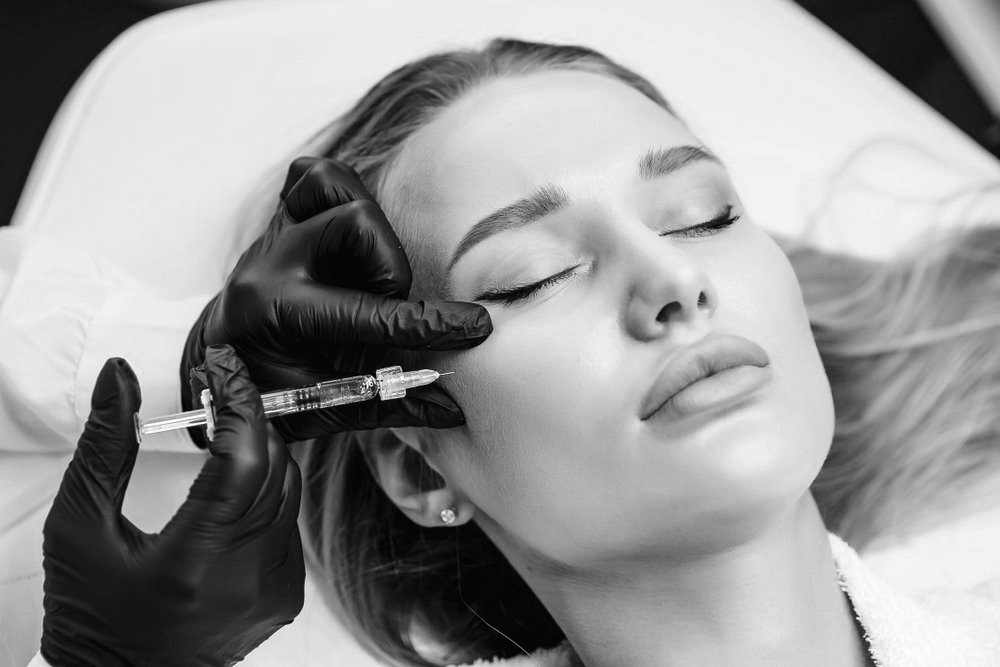
Hyaluronic acid filler placed in the tear trough to correct under-eye hollowing. Performed personally by Dr. Amir Mortazavi, MD.
The tear trough is the depression between the lower eyelid and the cheek. As the fat pad supporting it diminishes, a shadow forms — which reads as tiredness regardless of how much you've slept. Filler placed deep, on bone, restores that support and softens the shadow.
Not every dark under-eye is a hollow, and this is where most disappointment comes from.
Filler only fixes one of these:
Hollowing — a genuine depression casting a shadow. Filler helps.
Pigmentation — actual brown discoloration in the skin. Filler does nothing. This needs pigment laser treatment.
Thin skin showing underlying vessels — a bluish rather than brown tone. Filler placed here can make it look worse, not better. Skin quality treatment is the answer.
Fat pad prolapse — the lower lid bulging forward rather than the trough sinking in. Adding filler beneath a bulge makes the whole area heavier. This is a surgical problem.
A quick self-check: look in a mirror under overhead light, then tilt your face upward toward the light. If the darkness largely disappears when the shadow is removed, it's a hollow. If it stays, it's pigment or vessels.
Most under-eyes are a combination. Dr. Mortazavi will tell you the proportion at consultation, including when filler isn't the answer.
Why this area is treated with more caution than any other filler site.
The under-eye has very thin skin, minimal subcutaneous cushion, and vascular anatomy where complications are most consequential. It is also the area where filler most commonly persists far longer than expected — under-eye filler placed years ago is frequently still present.
Overfilling here produces puffiness that patients often mistake for their original problem worsening, and superficial placement can cause a bluish discoloration known as the Tyndall effect.
Treatment is therefore deliberately conservative: less product than most patients expect, placed deep, with reassessment at two weeks rather than adding more on the day.
What to expect: treatment takes about 20 minutes with numbing. Swelling for several days is normal and the under-eye holds swelling longer than other areas. Bruising is common here. The true result is at two to three weeks, not day one — don't judge it before then.
Already have under-eye filler you're unhappy with? This is one of the most common reasons patients seek correction. Ultrasound imaging shows exactly what's present and where before anything is added or removed — which matters more here than anywhere else on the face, given how long product persists in this area. Ultrasound-guided dissolving is available if removal is the right answer.
New to under-eye filler? Read the full guide to under-eye filler in Newport Beach
Hyaluronic acid filler placed in the tear trough to correct under-eye hollowing. Performed personally by Dr. Amir Mortazavi, MD.
The tear trough is the depression between the lower eyelid and the cheek. As the fat pad supporting it diminishes, a shadow forms — which reads as tiredness regardless of how much you've slept. Filler placed deep, on bone, restores that support and softens the shadow.
Not every dark under-eye is a hollow, and this is where most disappointment comes from.
Filler only fixes one of these:
Hollowing — a genuine depression casting a shadow. Filler helps.
Pigmentation — actual brown discoloration in the skin. Filler does nothing. This needs pigment laser treatment.
Thin skin showing underlying vessels — a bluish rather than brown tone. Filler placed here can make it look worse, not better. Skin quality treatment is the answer.
Fat pad prolapse — the lower lid bulging forward rather than the trough sinking in. Adding filler beneath a bulge makes the whole area heavier. This is a surgical problem.
A quick self-check: look in a mirror under overhead light, then tilt your face upward toward the light. If the darkness largely disappears when the shadow is removed, it's a hollow. If it stays, it's pigment or vessels.
Most under-eyes are a combination. Dr. Mortazavi will tell you the proportion at consultation, including when filler isn't the answer.
Why this area is treated with more caution than any other filler site.
The under-eye has very thin skin, minimal subcutaneous cushion, and vascular anatomy where complications are most consequential. It is also the area where filler most commonly persists far longer than expected — under-eye filler placed years ago is frequently still present.
Overfilling here produces puffiness that patients often mistake for their original problem worsening, and superficial placement can cause a bluish discoloration known as the Tyndall effect.
Treatment is therefore deliberately conservative: less product than most patients expect, placed deep, with reassessment at two weeks rather than adding more on the day.
What to expect: treatment takes about 20 minutes with numbing. Swelling for several days is normal and the under-eye holds swelling longer than other areas. Bruising is common here. The true result is at two to three weeks, not day one — don't judge it before then.
Already have under-eye filler you're unhappy with? This is one of the most common reasons patients seek correction. Ultrasound imaging shows exactly what's present and where before anything is added or removed — which matters more here than anywhere else on the face, given how long product persists in this area. Ultrasound-guided dissolving is available if removal is the right answer.
 Image 1 of 1