New to filler? Read the full guide to dermal fillers in Newport Beach before booking.
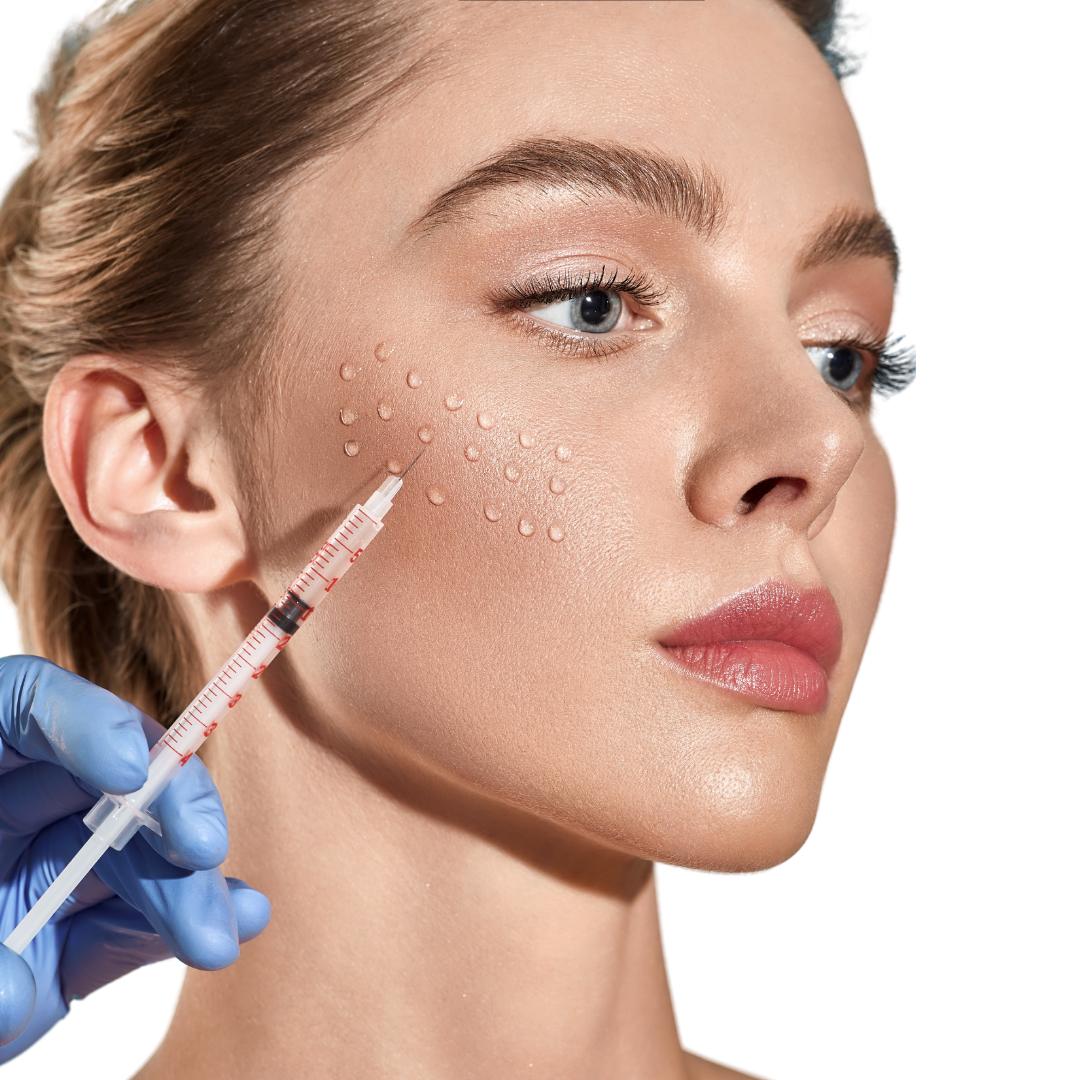
Hyaluronic acid filler placed in the midface, injected personally by Dr. Amir Mortazavi, MD.
The midface is where facial aging begins and where it does the most structural damage. The fat pads supporting the cheek diminish and descend, which flattens the front of the face — and because the midface holds everything below it, that loss shows up in places most patients don't connect to their cheeks.
Restoring midface support does more than fill the cheek. It's the foundation the lower face rests on.
Why treating the cheek often fixes what you came in about.
Deep nasolabial folds are frequently caused by midface volume loss rather than a deficit in the fold itself. Filling the fold directly can flatten and thicken the area; restoring the cheek lifts the tissue above it and softens the fold more naturally.
Under-eye hollowing frequently improves when the cheek beneath it is supported, because the transition from lid to cheek becomes continuous rather than stepped.
A face that looks tired or flat in photographs is often midface projection rather than anything around the eyes.
Dr. Mortazavi assesses this at consultation. The area that bothers you is frequently not the area that needs treatment.
The most common way cheek filler goes wrong.
Cheeks are the area where cumulative overfilling shows first, because the midface holds product well and it's easy to add a little more each year. Add a syringe annually on the assumption the previous one metabolised — when much of it hasn't — and after several years the result is a face that reads as filled rather than restored.
The treatment here is deliberately conservative: less product than most patients expect, placed with structural support in mind rather than surface volume, and reassessed at two weeks rather than topped up on the day.
Already have cheek filler and unsure how much is in there? Ultrasound mapping shows exactly what's present before anything is added.
Filler or Sculptra?
Filler is right for a specific hollow needing targeted correction, with a result you see the same day. Reversible.
Sculptra is better for broad, diffuse volume loss across the whole midface — it builds your own collagen over months. Not reversible, but generally longer-lasting and more gradual.
Many patients are better served by one than the other, and some by both.
What to expect: 20 to 30 minutes with numbing. Results visible immediately, though swelling means the true result is at about two weeks. Bruising is common. Duration typically 12 to 18 months in this area — longer than most, since the midface moves less than the mouth.
If several areas are involved, facial balancing treats them as one plan rather than one at a time.
Every injection performed by Dr. Mortazavi personally. Over years, the same physician tracking cumulative volume is the most reliable protection against the overfilled look — which almost always develops gradually, across providers, with nobody watching the total.
New to filler? Read the full guide to dermal fillers in Newport Beach before booking.
Hyaluronic acid filler placed in the midface, injected personally by Dr. Amir Mortazavi, MD.
The midface is where facial aging begins and where it does the most structural damage. The fat pads supporting the cheek diminish and descend, which flattens the front of the face — and because the midface holds everything below it, that loss shows up in places most patients don't connect to their cheeks.
Restoring midface support does more than fill the cheek. It's the foundation the lower face rests on.
Why treating the cheek often fixes what you came in about.
Deep nasolabial folds are frequently caused by midface volume loss rather than a deficit in the fold itself. Filling the fold directly can flatten and thicken the area; restoring the cheek lifts the tissue above it and softens the fold more naturally.
Under-eye hollowing frequently improves when the cheek beneath it is supported, because the transition from lid to cheek becomes continuous rather than stepped.
A face that looks tired or flat in photographs is often midface projection rather than anything around the eyes.
Dr. Mortazavi assesses this at consultation. The area that bothers you is frequently not the area that needs treatment.
The most common way cheek filler goes wrong.
Cheeks are the area where cumulative overfilling shows first, because the midface holds product well and it's easy to add a little more each year. Add a syringe annually on the assumption the previous one metabolised — when much of it hasn't — and after several years the result is a face that reads as filled rather than restored.
The treatment here is deliberately conservative: less product than most patients expect, placed with structural support in mind rather than surface volume, and reassessed at two weeks rather than topped up on the day.
Already have cheek filler and unsure how much is in there? Ultrasound mapping shows exactly what's present before anything is added.
Filler or Sculptra?
Filler is right for a specific hollow needing targeted correction, with a result you see the same day. Reversible.
Sculptra is better for broad, diffuse volume loss across the whole midface — it builds your own collagen over months. Not reversible, but generally longer-lasting and more gradual.
Many patients are better served by one than the other, and some by both.
What to expect: 20 to 30 minutes with numbing. Results visible immediately, though swelling means the true result is at about two weeks. Bruising is common. Duration typically 12 to 18 months in this area — longer than most, since the midface moves less than the mouth.
If several areas are involved, facial balancing treats them as one plan rather than one at a time.
Every injection performed by Dr. Mortazavi personally. Over years, the same physician tracking cumulative volume is the most reliable protection against the overfilled look — which almost always develops gradually, across providers, with nobody watching the total.
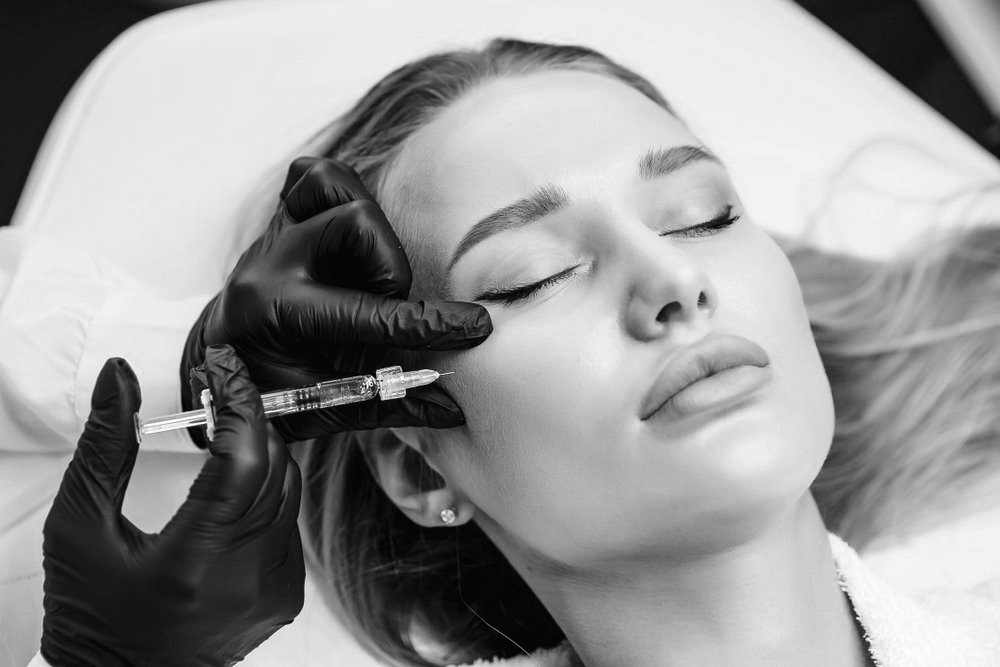 Image 1 of 1