New to CO2 laser? Read the full guide to CO2 laser resurfacing in Newport Beach before booking.
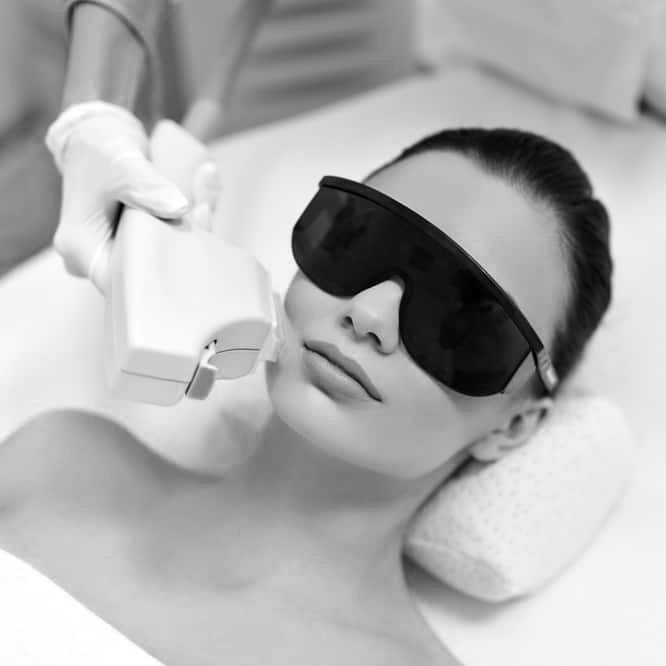
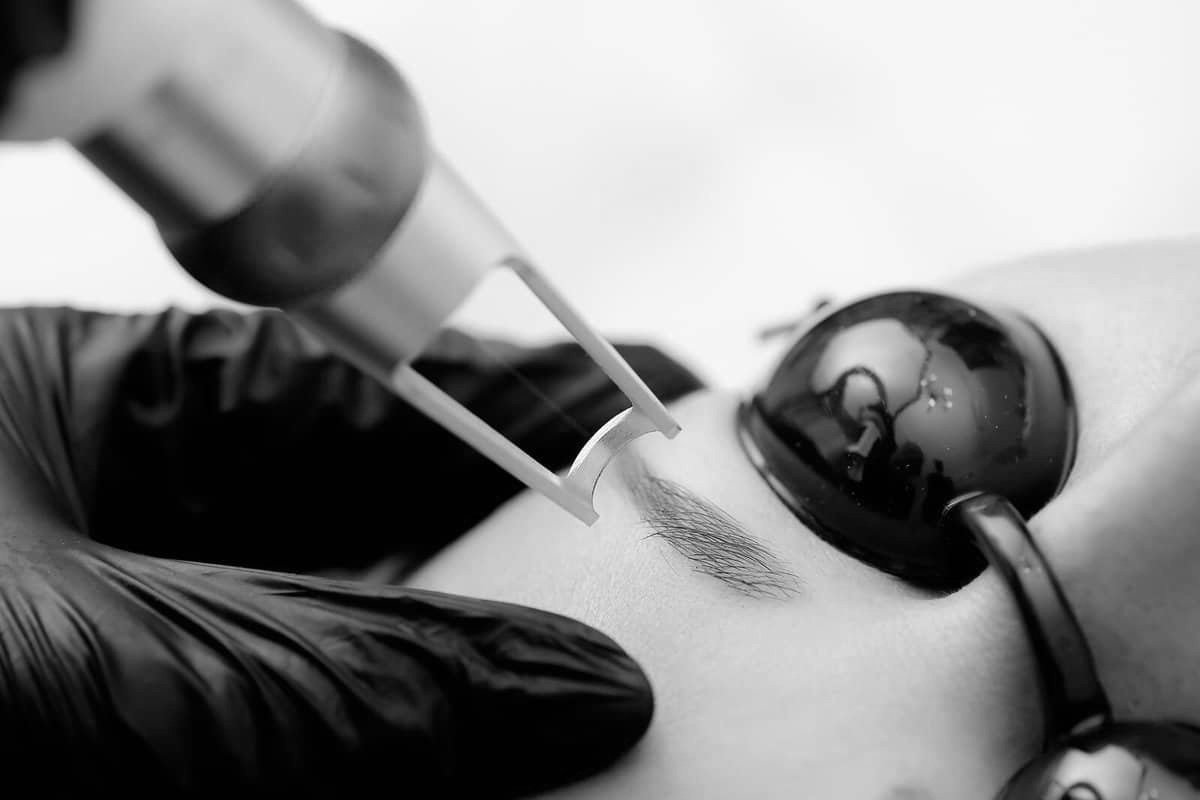
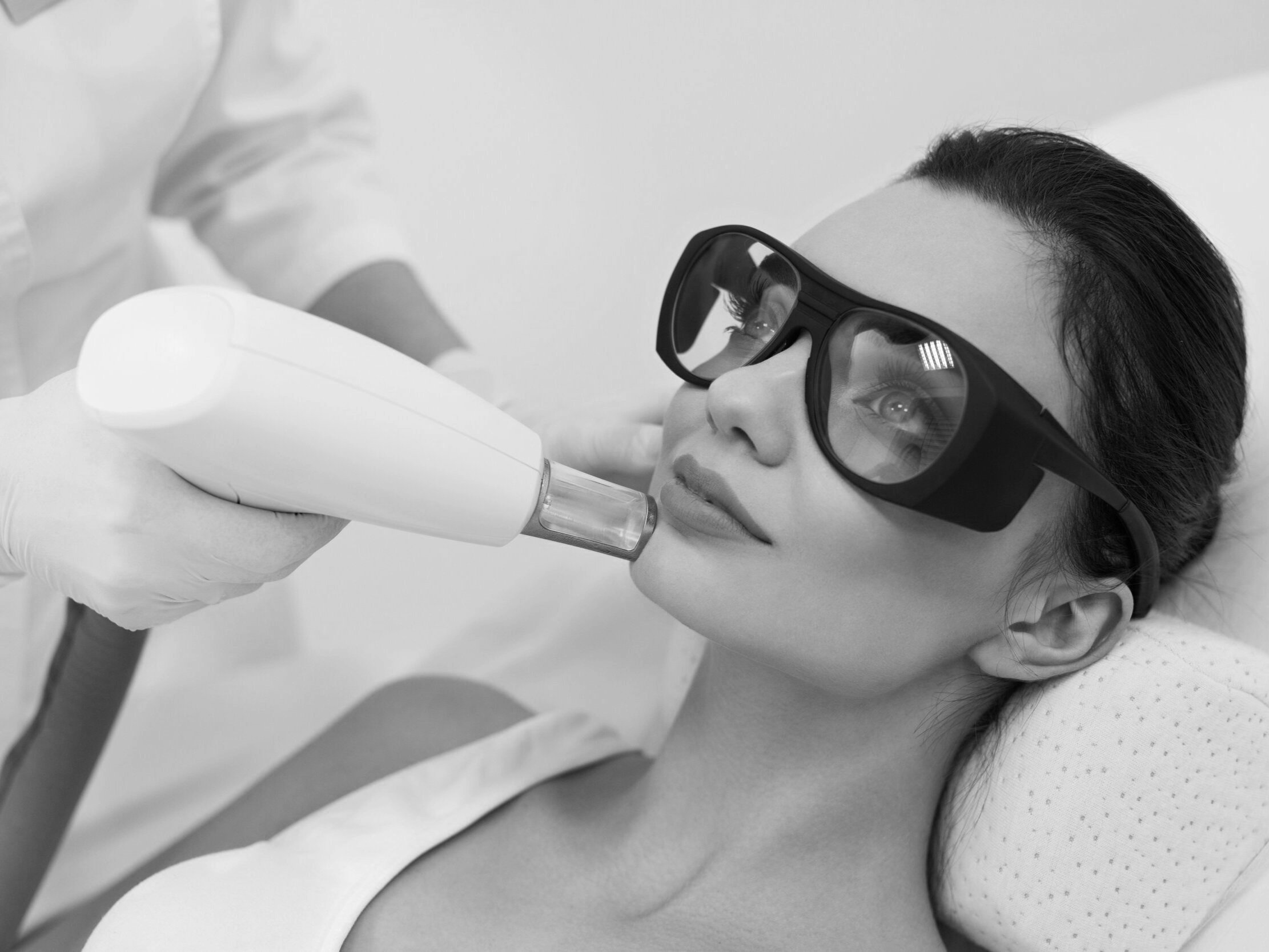
Fractional CO2 resurfacing of the periorbital area, performed personally by Dr. Amir Mortazavi, MD.
Under-eye skin is the thinnest on the body — a fraction of the thickness of cheek skin, with minimal underlying support. It's the first area to show crepiness and fine lines, and the area where topical products consistently fail, because they can't reach the depth where the change is happening.
Fractional CO2 works at that depth. Controlled columns of ablation and heat prompt the skin to rebuild with new collagen, thickening tissue that has thinned and tightening the crepey texture.
Treats: crepey, wrinkled under-eye texture · fine lines and etched creases · thin, papery skin quality · crow's feet extending from the outer corner · loss of firmness in the lower lid · mild textural laxity
Under-eye is not the same treatment as face.
This is the most important thing to understand before booking periorbital resurfacing anywhere.
The skin here is thinner, heals differently, and sits immediately adjacent to structures that don't tolerate error. Settings appropriate for the cheek are not appropriate here. Density, depth, and energy are reduced substantially, and the area is treated with defined anatomical boundaries rather than blended into the facial treatment.
Results build across a series rather than arriving from one aggressive pass. That's the correct approach for this tissue, not caution for its own sake — and it's the reason periorbital work shouldn't be delegated to a laser technician following a facial protocol.
What resurfacing fixes here, and what it doesn't.
Under-eye complaints are usually a mix of four separate problems, and this treats one of them:
Crepey texture and fine lines → resurfacing. This treatment.
Hollowing casting a shadow → volume, not texture. See under-eye filler.
Brown pigmentation → pigment laser. See Pico laser.
Fat pad prolapse — the lower lid bulging forward → surgical. Resurfacing the skin over a bulge doesn't flatten it.
Most patients have two or three of these simultaneously. Treating only the texture when hollowing is the dominant problem produces a disappointing result from a treatment that worked correctly. Dr. Mortazavi assesses the proportion at consultation and sequences accordingly.
Not sure which of the four you have? There's a two-part self-check that sorts most of it out in ten seconds: what under-eye CO2 fixes and what it won't.
What to expect: 20 to 30 minutes with topical numbing. Expect swelling — the under-eye holds fluid more than any other facial area, and the first 48 hours are the most swollen you'll be. Redness and a fine sandpaper texture as treated tissue sheds. Most patients are presentable in five to seven days, with lingering pinkness beyond that.
Sleep with your head elevated for the first few nights. It measurably reduces morning swelling.
Most patients need two to three sessions spaced six to eight weeks apart. Conservative settings mean progressive improvement rather than one dramatic change. Full day-by-day recovery detail is on the under-eye CO2 treatment page.
Deeper skin tones carry higher post-inflammatory pigmentation risk with ablative treatment, and the periorbital area is unforgiving of pigment change. A non-ablative approach is frequently the better choice, assessed at consultation rather than assumed — see which laser suits your skin tone.
If previous under-eye filler is contributing to the puffiness rather than the texture, that's a different problem: tear trough filler dissolving.
New to CO2 laser? Read the full guide to CO2 laser resurfacing in Newport Beach before booking.
Fractional CO2 resurfacing of the periorbital area, performed personally by Dr. Amir Mortazavi, MD.
Under-eye skin is the thinnest on the body — a fraction of the thickness of cheek skin, with minimal underlying support. It's the first area to show crepiness and fine lines, and the area where topical products consistently fail, because they can't reach the depth where the change is happening.
Fractional CO2 works at that depth. Controlled columns of ablation and heat prompt the skin to rebuild with new collagen, thickening tissue that has thinned and tightening the crepey texture.
Treats: crepey, wrinkled under-eye texture · fine lines and etched creases · thin, papery skin quality · crow's feet extending from the outer corner · loss of firmness in the lower lid · mild textural laxity
Under-eye is not the same treatment as face.
This is the most important thing to understand before booking periorbital resurfacing anywhere.
The skin here is thinner, heals differently, and sits immediately adjacent to structures that don't tolerate error. Settings appropriate for the cheek are not appropriate here. Density, depth, and energy are reduced substantially, and the area is treated with defined anatomical boundaries rather than blended into the facial treatment.
Results build across a series rather than arriving from one aggressive pass. That's the correct approach for this tissue, not caution for its own sake — and it's the reason periorbital work shouldn't be delegated to a laser technician following a facial protocol.
What resurfacing fixes here, and what it doesn't.
Under-eye complaints are usually a mix of four separate problems, and this treats one of them:
Crepey texture and fine lines → resurfacing. This treatment.
Hollowing casting a shadow → volume, not texture. See under-eye filler.
Brown pigmentation → pigment laser. See Pico laser.
Fat pad prolapse — the lower lid bulging forward → surgical. Resurfacing the skin over a bulge doesn't flatten it.
Most patients have two or three of these simultaneously. Treating only the texture when hollowing is the dominant problem produces a disappointing result from a treatment that worked correctly. Dr. Mortazavi assesses the proportion at consultation and sequences accordingly.
Not sure which of the four you have? There's a two-part self-check that sorts most of it out in ten seconds: what under-eye CO2 fixes and what it won't.
What to expect: 20 to 30 minutes with topical numbing. Expect swelling — the under-eye holds fluid more than any other facial area, and the first 48 hours are the most swollen you'll be. Redness and a fine sandpaper texture as treated tissue sheds. Most patients are presentable in five to seven days, with lingering pinkness beyond that.
Sleep with your head elevated for the first few nights. It measurably reduces morning swelling.
Most patients need two to three sessions spaced six to eight weeks apart. Conservative settings mean progressive improvement rather than one dramatic change. Full day-by-day recovery detail is on the under-eye CO2 treatment page.
Deeper skin tones carry higher post-inflammatory pigmentation risk with ablative treatment, and the periorbital area is unforgiving of pigment change. A non-ablative approach is frequently the better choice, assessed at consultation rather than assumed — see which laser suits your skin tone.
If previous under-eye filler is contributing to the puffiness rather than the texture, that's a different problem: tear trough filler dissolving.
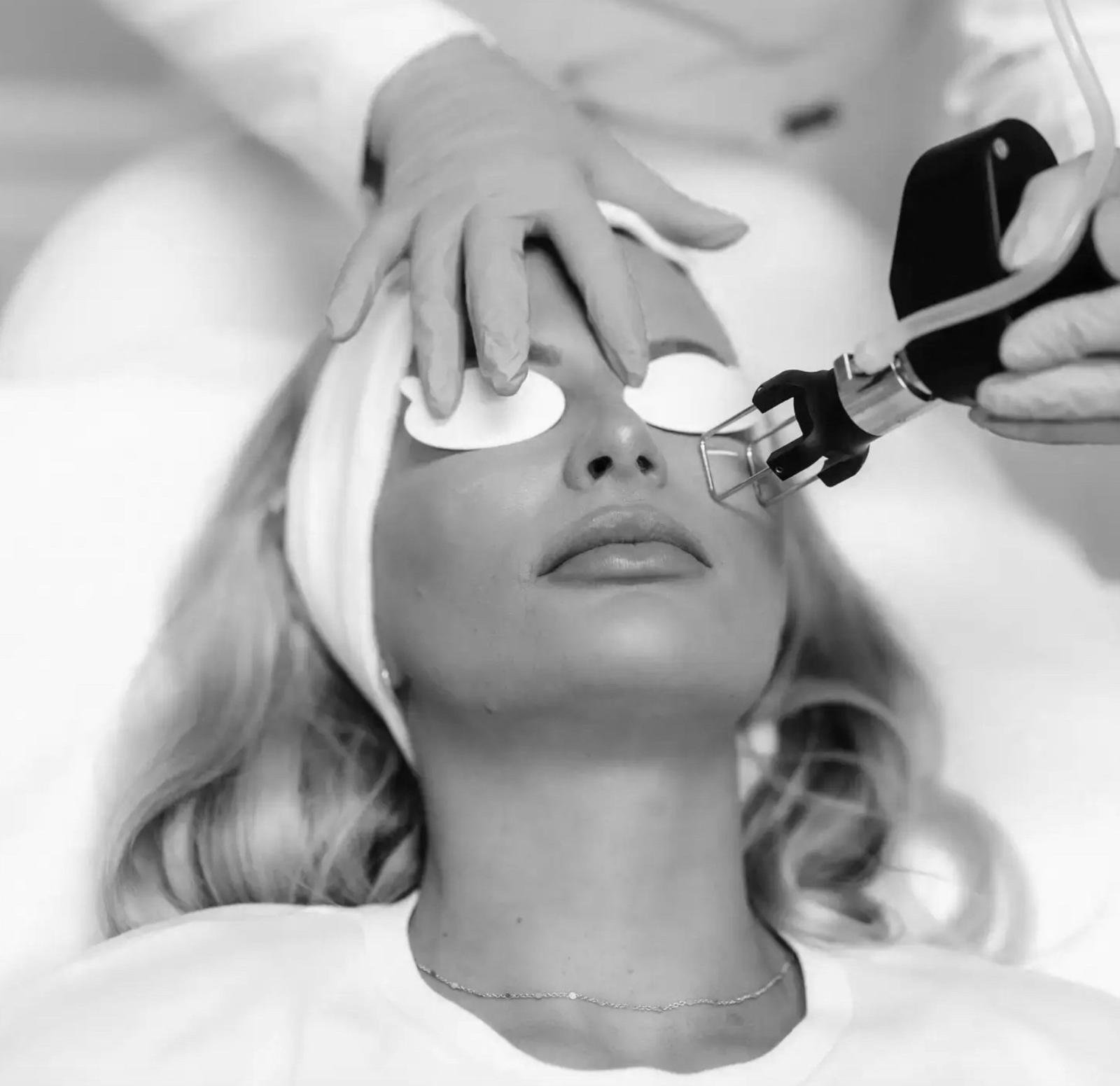 Image 1 of 2
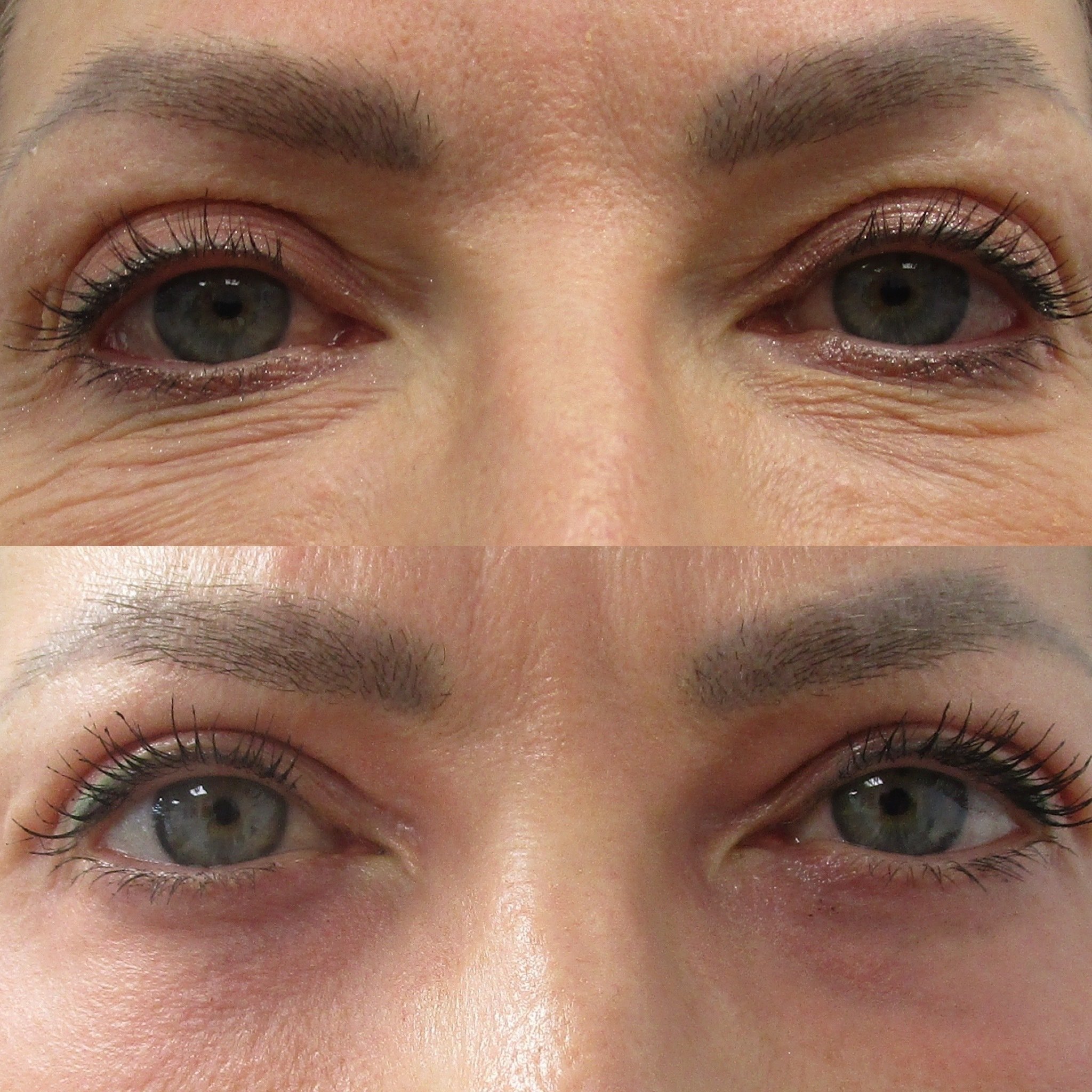 Image 2 of 2