New to laser resurfacing? Read the full guide to CO2 laser resurfacing in Newport Beach before booking.
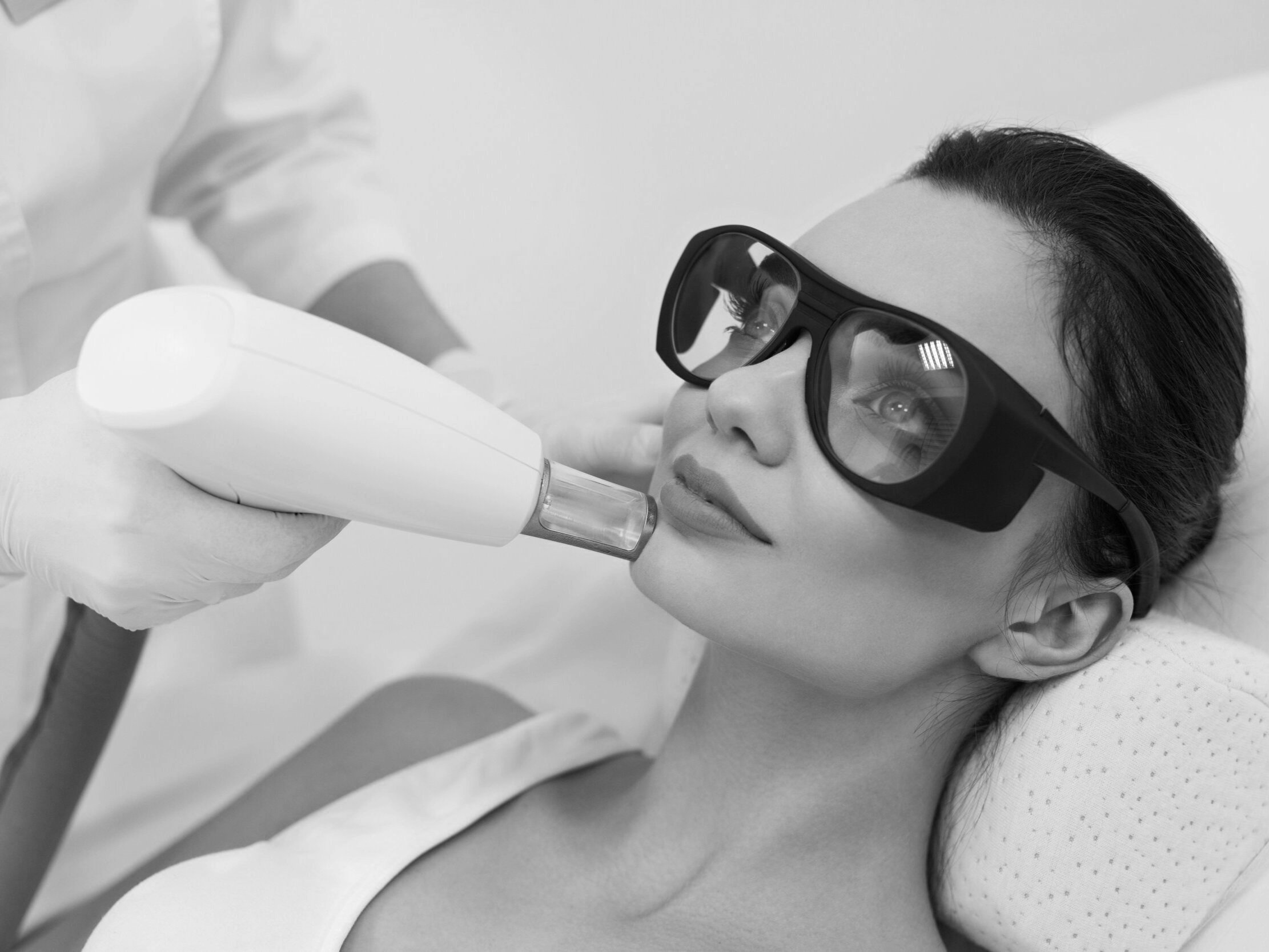
Fractional CO2 resurfacing of the neck, performed personally by Dr. Amir Mortazavi, MD.
The neck is the area that most often gives away age while the face looks treated. Sun exposure accumulates there just as heavily, but the skin is thinner, has fewer oil glands and hair follicles, and less underlying support — so it shows crepiness, horizontal lines, and mottled pigment earlier and more visibly.
Treats: crepey, papery texture · horizontal neck lines from skin quality · sun damage and mottled pigmentation · poikiloderma (the reddish-brown discoloration along the sides of the neck and upper chest) · overall skin quality and firmness
Why the neck is treated differently from the face.
This is the most important thing to understand before booking neck resurfacing anywhere.
Ablative lasers work by removing surface tissue. The skin then heals from the adnexal structures left behind — hair follicles and sweat glands, which act as reservoirs of new cells. The neck has far fewer of them than the face. Less regenerative reserve means slower healing and a genuinely higher risk of prolonged redness, scarring, and pigment change if the same settings used on a face are applied here.
Neck resurfacing is therefore performed with lower density and shallower depth, and results build across a series rather than arriving from one aggressive session. That's not conservatism for its own sake — it's the correct approach for the tissue.
This is the single strongest reason neck resurfacing shouldn't be delegated to a laser technician. The settings decision is the treatment, and the neck is where getting it wrong shows permanently.
What to expect: treatment takes 30 to 45 minutes with topical numbing. Redness, swelling, and a sandpaper texture for several days. Neck recovery runs longer than facial recovery — expect seven to ten days before you're fully presentable, and lingering pinkness beyond that is normal.
Most patients need two to three sessions spaced six to eight weeks apart. Sun protection during healing is non-negotiable; the neck is difficult to keep covered and unprotected exposure during recovery is the most common cause of a poor outcome.
What this won't do. It improves skin quality — texture, tone, pigment, fine lines. It does not tighten significant laxity, remove excess skin, sharpen the jawline, or address bands or submental fullness.
Platysmal bands → neurotoxin · submental fullness → Kybella · thin, depleted skin needing collagen → Radiesse for the neck · significant loose skin → a surgeon
Most necks have more than one of these. Dr. Mortazavi will tell you which components resurfacing addresses and which it won't.
Deeper skin tones carry a higher risk of post-inflammatory pigmentation with ablative treatment on the neck specifically. A non-ablative approach is often the better choice, and that assessment is made at consultation rather than assumed.
New to laser resurfacing? Read the full guide to CO2 laser resurfacing in Newport Beach before booking.
Fractional CO2 resurfacing of the neck, performed personally by Dr. Amir Mortazavi, MD.
The neck is the area that most often gives away age while the face looks treated. Sun exposure accumulates there just as heavily, but the skin is thinner, has fewer oil glands and hair follicles, and less underlying support — so it shows crepiness, horizontal lines, and mottled pigment earlier and more visibly.
Treats: crepey, papery texture · horizontal neck lines from skin quality · sun damage and mottled pigmentation · poikiloderma (the reddish-brown discoloration along the sides of the neck and upper chest) · overall skin quality and firmness
Why the neck is treated differently from the face.
This is the most important thing to understand before booking neck resurfacing anywhere.
Ablative lasers work by removing surface tissue. The skin then heals from the adnexal structures left behind — hair follicles and sweat glands, which act as reservoirs of new cells. The neck has far fewer of them than the face. Less regenerative reserve means slower healing and a genuinely higher risk of prolonged redness, scarring, and pigment change if the same settings used on a face are applied here.
Neck resurfacing is therefore performed with lower density and shallower depth, and results build across a series rather than arriving from one aggressive session. That's not conservatism for its own sake — it's the correct approach for the tissue.
This is the single strongest reason neck resurfacing shouldn't be delegated to a laser technician. The settings decision is the treatment, and the neck is where getting it wrong shows permanently.
What to expect: treatment takes 30 to 45 minutes with topical numbing. Redness, swelling, and a sandpaper texture for several days. Neck recovery runs longer than facial recovery — expect seven to ten days before you're fully presentable, and lingering pinkness beyond that is normal.
Most patients need two to three sessions spaced six to eight weeks apart. Sun protection during healing is non-negotiable; the neck is difficult to keep covered and unprotected exposure during recovery is the most common cause of a poor outcome.
What this won't do. It improves skin quality — texture, tone, pigment, fine lines. It does not tighten significant laxity, remove excess skin, sharpen the jawline, or address bands or submental fullness.
Platysmal bands → neurotoxin · submental fullness → Kybella · thin, depleted skin needing collagen → Radiesse for the neck · significant loose skin → a surgeon
Most necks have more than one of these. Dr. Mortazavi will tell you which components resurfacing addresses and which it won't.
Deeper skin tones carry a higher risk of post-inflammatory pigmentation with ablative treatment on the neck specifically. A non-ablative approach is often the better choice, and that assessment is made at consultation rather than assumed.
 Image 1 of 1