Comparing biostimulators? See Sculptra vs. Radiesse and Sculptra for hands and neck before booking.
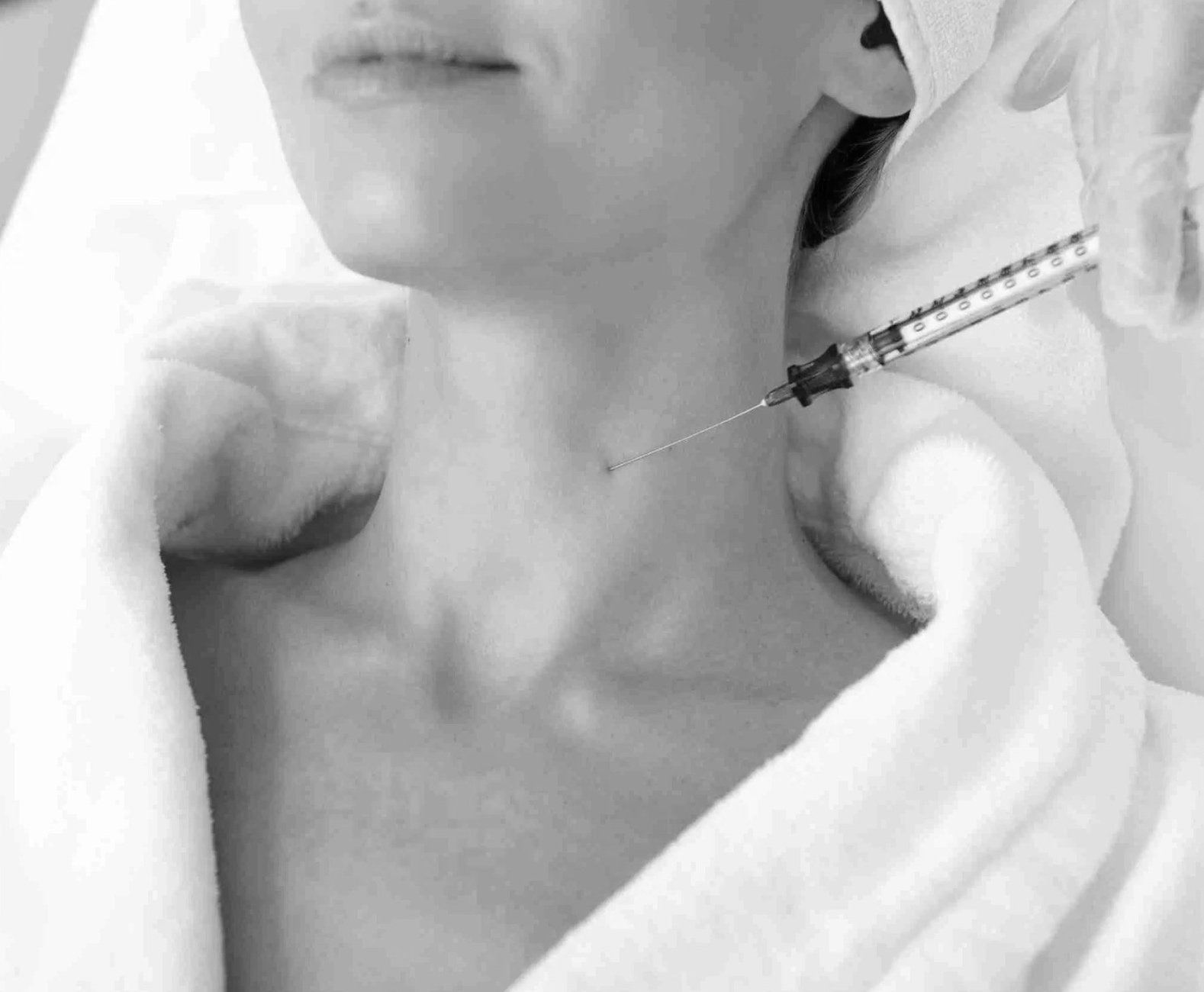
Diluted Radiesse applied across the neck to improve skin quality and firmness. Performed personally by Dr. Amir Mortazavi, MD.
Neck skin is thinner than facial skin, has less subcutaneous support, and moves constantly — which is why it shows crepiness, horizontal lines, and loss of firmness earlier and more visibly than the face does. It's also the area patients most often neglect while treating the face, producing a mismatch that gets more noticeable over time.
This is not the same treatment as Radiesse used for volume. For the neck, the product is significantly diluted and spread across the treatment area rather than placed in one location. The goal isn't adding volume — it's stimulating collagen broadly through thin, depleted skin to improve thickness, texture, and firmness.
Treats: crepey neck skin · horizontal neck lines from skin quality rather than muscle movement · thin, papery texture · loss of firmness and elasticity · overall neck skin quality
What it will not do, stated plainly.
This does not lift the neck. It doesn't tighten significant laxity, doesn't remove excess skin, doesn't sharpen the jawline, and doesn't address submental fullness. Those are surgical or different-treatment problems.
If you have loose skin you can grasp, banding that appears when you tense, or a soft area under the chin, biostimulator won't solve any of it. Platysmal bands need neurotoxin. Submental fullness needs Kybella or surgery. Significant laxityneeds a surgeon.
Dr. Mortazavi will tell you at consultation which of these you actually have. Frequently it's a combination, and knowing which components are treatable here matters more than the treatment itself.
What to expect: results build gradually as collagen develops over roughly three to six months. Most patients need a series — commonly two to three sessions spaced four to six weeks apart — with the full effect visible several months after the last one. Duration is typically a year or longer.
The neck is treated more conservatively than the face. Thin skin with minimal subcutaneous cushioning means product placed too superficially can be visible or palpable, and Radiesse cannot be dissolved. Depth and dilution are the controls, and there's no correcting an error after the fact.
Expect swelling and possible bruising for several days. Avoid strenuous activity for 24 to 48 hours.
Also worth knowing: neck skin shows sun damage as much as it shows aging. If pigmentation and redness are part of what's bothering you, biostimulator won't address them — Pico laser or IPL treats that component.
Comparing biostimulators? See Sculptra vs. Radiesse and Sculptra for hands and neck before booking.
Diluted Radiesse applied across the neck to improve skin quality and firmness. Performed personally by Dr. Amir Mortazavi, MD.
Neck skin is thinner than facial skin, has less subcutaneous support, and moves constantly — which is why it shows crepiness, horizontal lines, and loss of firmness earlier and more visibly than the face does. It's also the area patients most often neglect while treating the face, producing a mismatch that gets more noticeable over time.
This is not the same treatment as Radiesse used for volume. For the neck, the product is significantly diluted and spread across the treatment area rather than placed in one location. The goal isn't adding volume — it's stimulating collagen broadly through thin, depleted skin to improve thickness, texture, and firmness.
Treats: crepey neck skin · horizontal neck lines from skin quality rather than muscle movement · thin, papery texture · loss of firmness and elasticity · overall neck skin quality
What it will not do, stated plainly.
This does not lift the neck. It doesn't tighten significant laxity, doesn't remove excess skin, doesn't sharpen the jawline, and doesn't address submental fullness. Those are surgical or different-treatment problems.
If you have loose skin you can grasp, banding that appears when you tense, or a soft area under the chin, biostimulator won't solve any of it. Platysmal bands need neurotoxin. Submental fullness needs Kybella or surgery. Significant laxityneeds a surgeon.
Dr. Mortazavi will tell you at consultation which of these you actually have. Frequently it's a combination, and knowing which components are treatable here matters more than the treatment itself.
What to expect: results build gradually as collagen develops over roughly three to six months. Most patients need a series — commonly two to three sessions spaced four to six weeks apart — with the full effect visible several months after the last one. Duration is typically a year or longer.
The neck is treated more conservatively than the face. Thin skin with minimal subcutaneous cushioning means product placed too superficially can be visible or palpable, and Radiesse cannot be dissolved. Depth and dilution are the controls, and there's no correcting an error after the fact.
Expect swelling and possible bruising for several days. Avoid strenuous activity for 24 to 48 hours.
Also worth knowing: neck skin shows sun damage as much as it shows aging. If pigmentation and redness are part of what's bothering you, biostimulator won't address them — Pico laser or IPL treats that component.
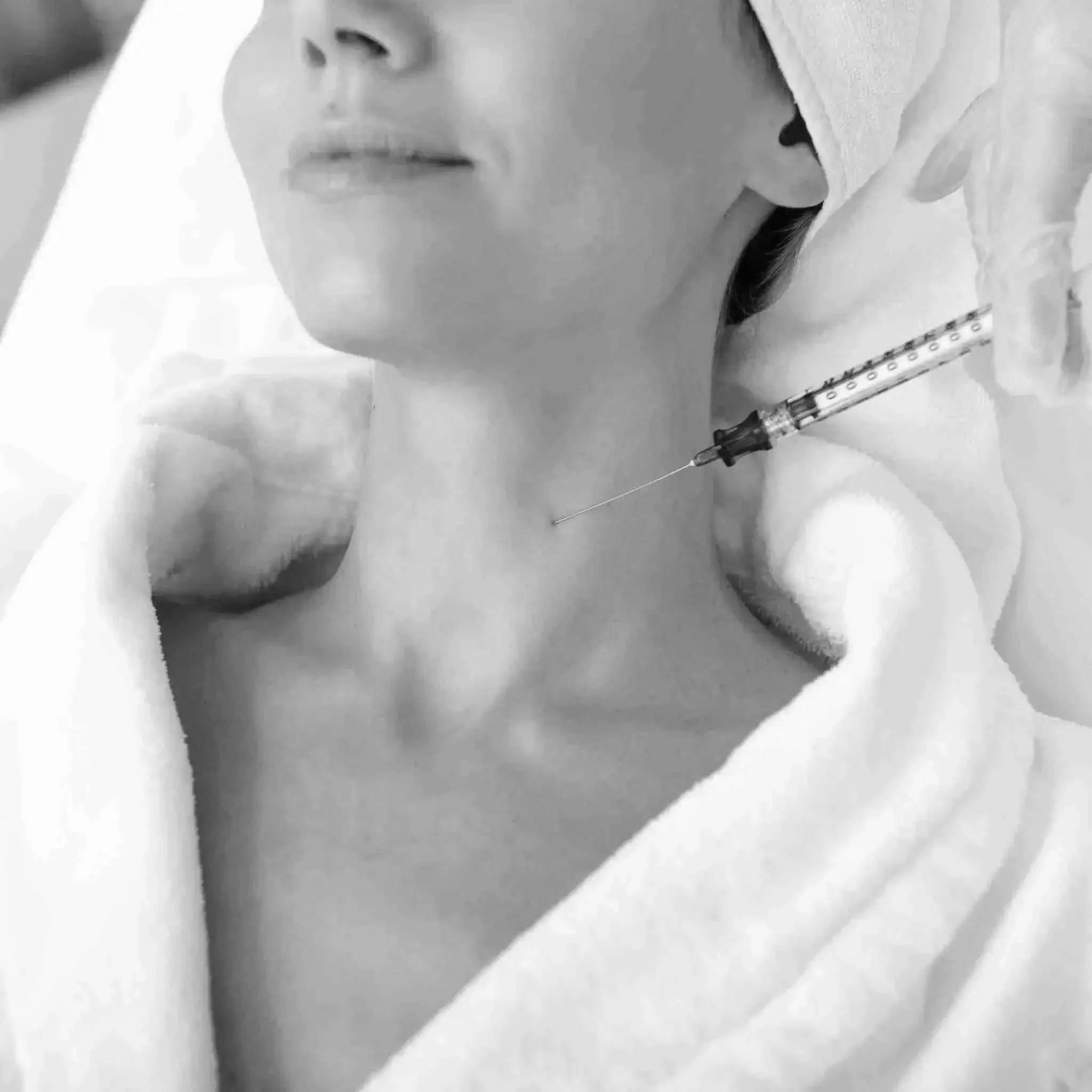 Image 1 of 1