Comparing pigment options? See how to choose a pigmentation laser — four devices, and they treat different problems at different depths.
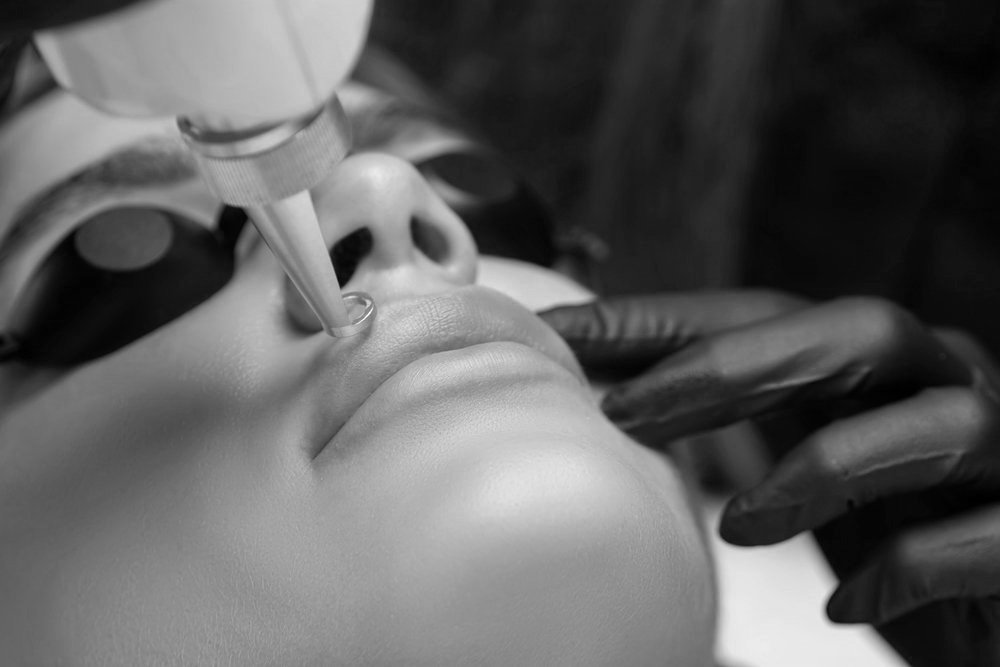
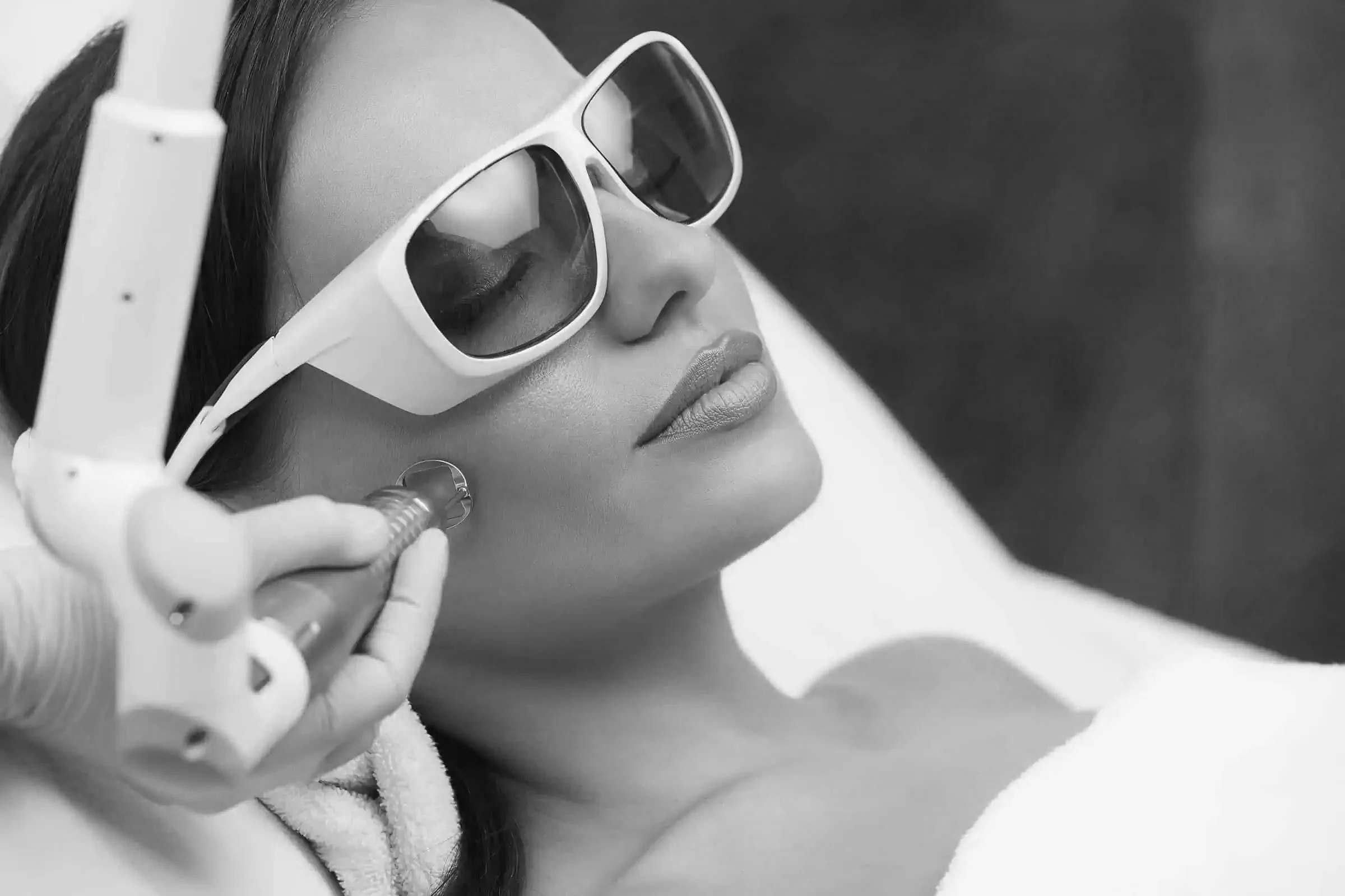
Non-ablative fractional laser at 1927nm. Performed personally by Dr. Amir Mortazavi, MD.
This wavelength is absorbed so strongly by water that its energy is spent in the epidermis and never reaches the dermis. Treated tissue isn't removed at the time of treatment — it's carried upward and shed over the following week as the skin turns over. That's what keeps recovery to a few days.
The trade is depth. Because it stays superficial, it treats surface pigment and brightness well and won't reach texture, scarring, or anything structural. It's a brightening device, not a resurfacing device, and it's better understood that way than as a gentler version of something else.
Treats: sun spots and solar lentigines · dullness and uneven tone · surface photodamage · overall clarity · fine surface texture as a secondary effect
Pricing: $700 single session, full face. $1,600 for a package of three — a $500 saving. Neck and chest available as add-ons to a face session. Financing through Cherry and CareCredit.
This is a series, not a single treatment. Superficial treatment works by accumulation — most patients need three to five sessions spaced four to six weeks apart. One session produces visible brightening but not a finished result. That's the honest trade for the short recovery, and anyone selling a single session as a transformation is misrepresenting how it works.
What to expect: twenty to thirty minutes with topical numbing. Warmth and prickling during the pass, then flushing afterward like mild sunburn. Redness settles within a day or two, then light bronzing appears as treated tissue works upward, shedding as fine flaking over about a week. Most patients are comfortable with makeup by day three. Don't scrub or pick — let it come away on its own.
Good choice if your concern is genuinely at the surface, you can't take a week out for recovery, you're starting with lasers and want a lower-commitment introduction, or you want maintenance between larger resurfacing sessions.
Consider something else if the real concern is texture, scarring, or wrinkles — erbium or CO2 reach the dermis and will get you further. A superficial device won't address any of that, and no number of sessions changes it.
On melasma: this isn't the starting point. Melasma is heat-sensitive and can rebound darker after thermal treatment, and much of the pigment sits deeper than a superficial device reaches. Pico laser fragments melanin mechanically rather than by heating it, which is why it's the primary approach here.
Sun protection decides whether this holds. The pigment being treated is largely sun-driven — returning to unprotected exposure reproduces it, usually within a season. Daily SPF through the series and afterward isn't aftercare, it's the maintenance plan.
Not suitable if you have active infection or an inflammatory skin condition in the area, recent isotretinoin use, or recently tanned skin — wait for a tan to fade, since treating elevated melanin raises the risk of the exact pigmentary change you're trying to fix. Pregnancy and breastfeeding are also reasons to wait, since hormonally driven pigment often settles on its own.
Comparing pigment options? See how to choose a pigmentation laser — four devices, and they treat different problems at different depths.
Non-ablative fractional laser at 1927nm. Performed personally by Dr. Amir Mortazavi, MD.
This wavelength is absorbed so strongly by water that its energy is spent in the epidermis and never reaches the dermis. Treated tissue isn't removed at the time of treatment — it's carried upward and shed over the following week as the skin turns over. That's what keeps recovery to a few days.
The trade is depth. Because it stays superficial, it treats surface pigment and brightness well and won't reach texture, scarring, or anything structural. It's a brightening device, not a resurfacing device, and it's better understood that way than as a gentler version of something else.
Treats: sun spots and solar lentigines · dullness and uneven tone · surface photodamage · overall clarity · fine surface texture as a secondary effect
Pricing: $700 single session, full face. $1,600 for a package of three — a $500 saving. Neck and chest available as add-ons to a face session. Financing through Cherry and CareCredit.
This is a series, not a single treatment. Superficial treatment works by accumulation — most patients need three to five sessions spaced four to six weeks apart. One session produces visible brightening but not a finished result. That's the honest trade for the short recovery, and anyone selling a single session as a transformation is misrepresenting how it works.
What to expect: twenty to thirty minutes with topical numbing. Warmth and prickling during the pass, then flushing afterward like mild sunburn. Redness settles within a day or two, then light bronzing appears as treated tissue works upward, shedding as fine flaking over about a week. Most patients are comfortable with makeup by day three. Don't scrub or pick — let it come away on its own.
Good choice if your concern is genuinely at the surface, you can't take a week out for recovery, you're starting with lasers and want a lower-commitment introduction, or you want maintenance between larger resurfacing sessions.
Consider something else if the real concern is texture, scarring, or wrinkles — erbium or CO2 reach the dermis and will get you further. A superficial device won't address any of that, and no number of sessions changes it.
On melasma: this isn't the starting point. Melasma is heat-sensitive and can rebound darker after thermal treatment, and much of the pigment sits deeper than a superficial device reaches. Pico laser fragments melanin mechanically rather than by heating it, which is why it's the primary approach here.
Sun protection decides whether this holds. The pigment being treated is largely sun-driven — returning to unprotected exposure reproduces it, usually within a season. Daily SPF through the series and afterward isn't aftercare, it's the maintenance plan.
Not suitable if you have active infection or an inflammatory skin condition in the area, recent isotretinoin use, or recently tanned skin — wait for a tan to fade, since treating elevated melanin raises the risk of the exact pigmentary change you're trying to fix. Pregnancy and breastfeeding are also reasons to wait, since hormonally driven pigment often settles on its own.
 Image 1 of 1