Laser resurfacing of scar tissue to improve texture, color, and pliability. Performed personally by Dr. Amir Mortazavi, MD.
Scars differ from surrounding skin in three ways: texture, color, and flexibility. Collagen in a scar is laid down in disorganized, dense bundles rather than the ordered structure of normal skin — which is why scars feel firm, look different in tone, and often restrict movement across a joint.
Laser treatment remodels that collagen. Controlled thermal injury prompts the tissue to reorganize during healing, producing scars that are flatter, softer, closer in color to surrounding skin, and more pliable.
Treats: surgical scars · burn scars · traumatic and accident scars · raised hypertrophic scars · red or discolored scars · scars that feel tight or restrict movement · thickened C-section and mastectomy scars
Select by size:
Small — a single scar or limited area, roughly under 2 inches.
Large — extended scars, multiple scars, or a broader treatment field.
Which scar treatment do you actually need?
Scars aren't one problem, and the right approach depends on what yours is doing:
Raised and firm → steroid injection is usually first-line, and often more effective than laser alone.
Very dense keloid that hasn't responded to injection → laser-assisted steroid delivery creates microchannels so the medication actually penetrates.
Flat but wrong in texture or color → this treatment.
Depressed or indented → laser won't lift it. That needs subcision.
Most patients need a combination, sequenced across sessions. Dr. Mortazavi assesses which components your scar has before treating.
Timing matters more than most people realize.
Scars remodel naturally for a year or longer after they form, and early laser treatment during that active phase generally produces better results than treating a scar that has fully matured. Once healing is complete — typically several weeks after the wound closed — treatment can usually begin.
That said, older scars respond too. If yours is years old, it's still worth assessing rather than assuming the window closed.
What to expect: 20 to 45 minutes depending on size, with topical numbing. Redness and mild crusting over the treated scar for several days. Improvement is progressive — softening, flattening, and color change build over weeks.
This is a series. Most scars need three to five sessions spaced four to six weeks apart. Meaningful change is rarely visible after one.
Realistic outcome: scars improve. They don't disappear. A scar is permanent tissue, and the goal is making it less noticeable — flatter, closer in color, softer, less restrictive. Any provider promising removal is overselling.
Deeper skin tones carry higher risk of pigment change with laser scar treatment, and conservative settings or an alternative approach may be more appropriate. Assessed at consultation rather than assumed.
Laser resurfacing of scar tissue to improve texture, color, and pliability. Performed personally by Dr. Amir Mortazavi, MD.
Scars differ from surrounding skin in three ways: texture, color, and flexibility. Collagen in a scar is laid down in disorganized, dense bundles rather than the ordered structure of normal skin — which is why scars feel firm, look different in tone, and often restrict movement across a joint.
Laser treatment remodels that collagen. Controlled thermal injury prompts the tissue to reorganize during healing, producing scars that are flatter, softer, closer in color to surrounding skin, and more pliable.
Treats: surgical scars · burn scars · traumatic and accident scars · raised hypertrophic scars · red or discolored scars · scars that feel tight or restrict movement · thickened C-section and mastectomy scars
Select by size:
Small — a single scar or limited area, roughly under 2 inches.
Large — extended scars, multiple scars, or a broader treatment field.
Which scar treatment do you actually need?
Scars aren't one problem, and the right approach depends on what yours is doing:
Raised and firm → steroid injection is usually first-line, and often more effective than laser alone.
Very dense keloid that hasn't responded to injection → laser-assisted steroid delivery creates microchannels so the medication actually penetrates.
Flat but wrong in texture or color → this treatment.
Depressed or indented → laser won't lift it. That needs subcision.
Most patients need a combination, sequenced across sessions. Dr. Mortazavi assesses which components your scar has before treating.
Timing matters more than most people realize.
Scars remodel naturally for a year or longer after they form, and early laser treatment during that active phase generally produces better results than treating a scar that has fully matured. Once healing is complete — typically several weeks after the wound closed — treatment can usually begin.
That said, older scars respond too. If yours is years old, it's still worth assessing rather than assuming the window closed.
What to expect: 20 to 45 minutes depending on size, with topical numbing. Redness and mild crusting over the treated scar for several days. Improvement is progressive — softening, flattening, and color change build over weeks.
This is a series. Most scars need three to five sessions spaced four to six weeks apart. Meaningful change is rarely visible after one.
Realistic outcome: scars improve. They don't disappear. A scar is permanent tissue, and the goal is making it less noticeable — flatter, closer in color, softer, less restrictive. Any provider promising removal is overselling.
Deeper skin tones carry higher risk of pigment change with laser scar treatment, and conservative settings or an alternative approach may be more appropriate. Assessed at consultation rather than assumed.
 Image 1 of 4
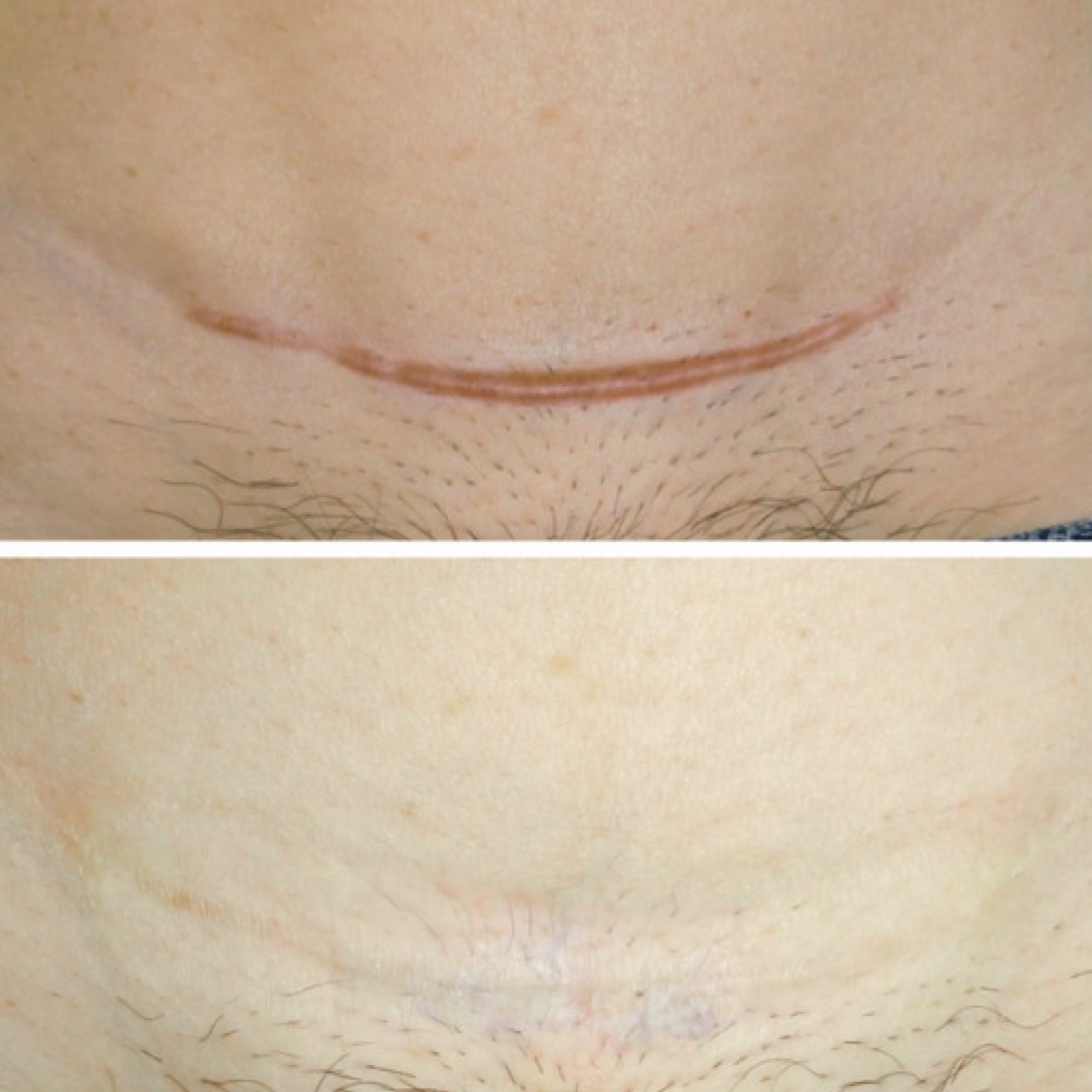 Image 2 of 4
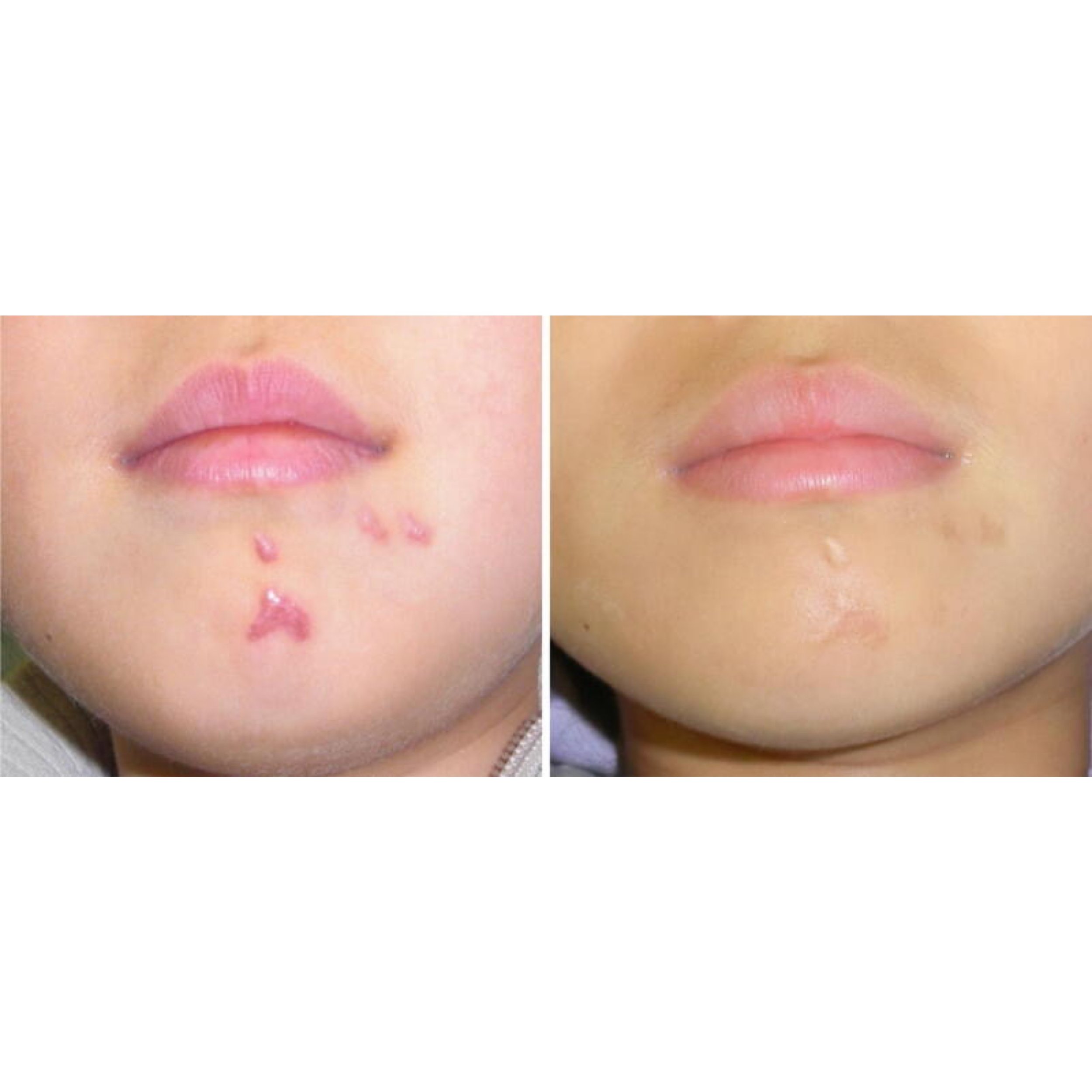 Image 3 of 4
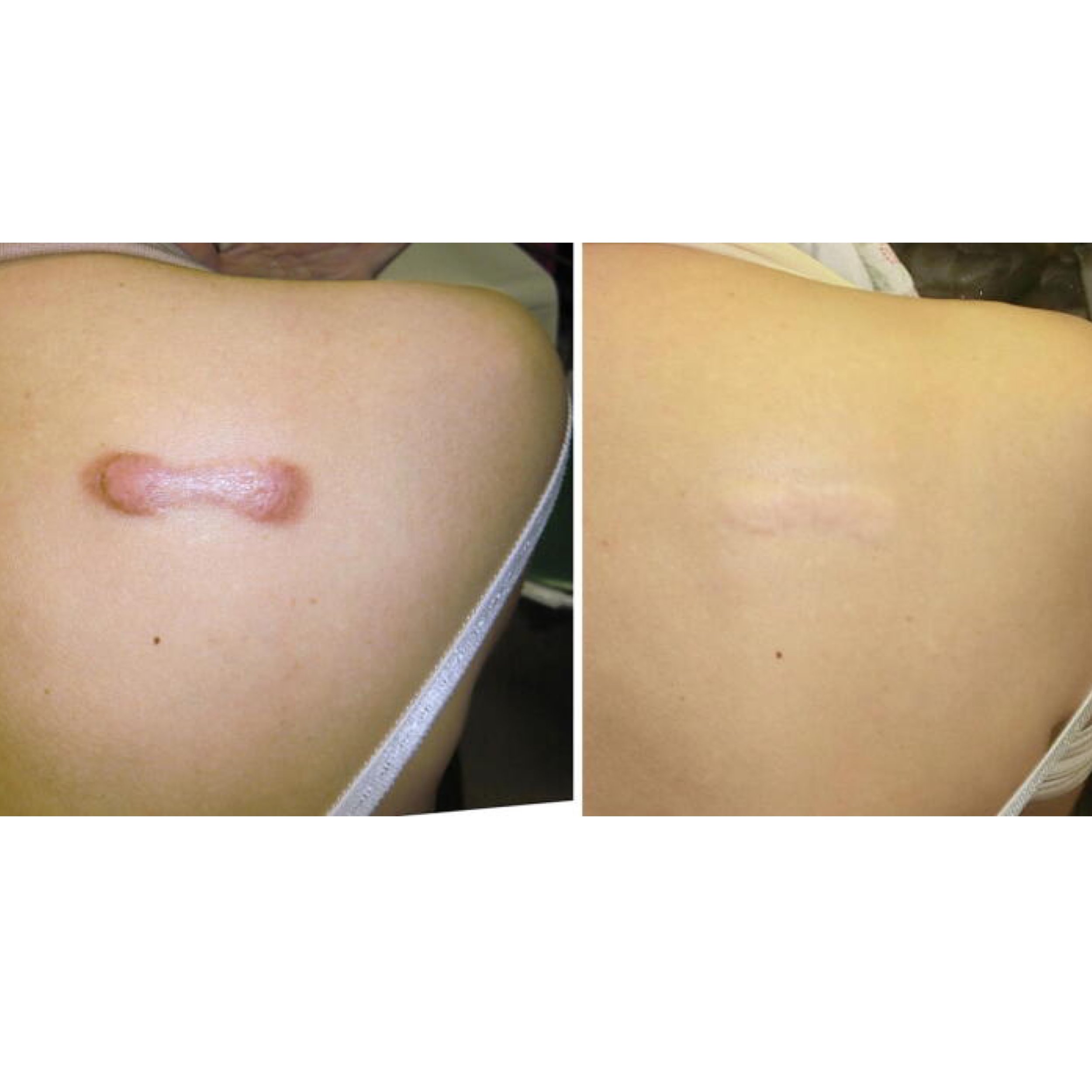 Image 4 of 4