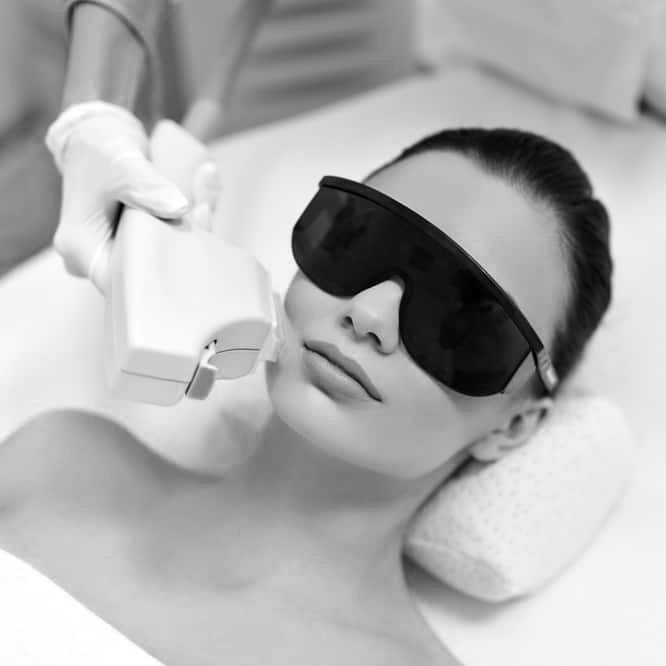
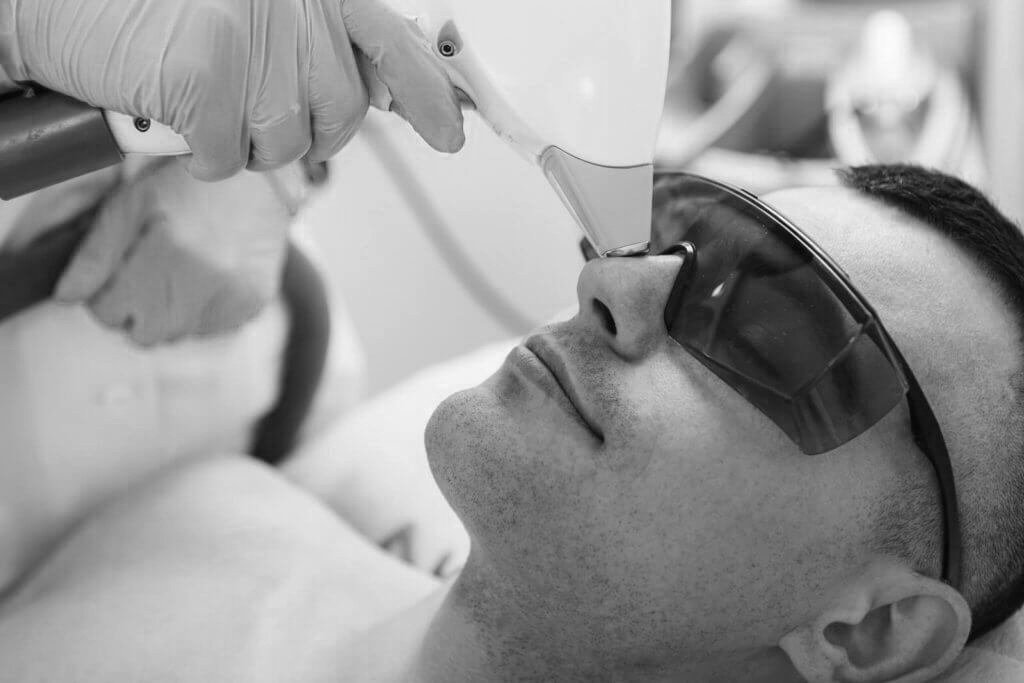
Fractional laser combined with topical corticosteroid to treat raised, dense scar tissue. Performed personally by Dr. Amir Mortazavi, MD.
Keloids and hypertrophic scars are dense, fibrous, and poorly vascularized — which is exactly why they're difficult to treat. A steroid injected into that tissue tends to follow the path of least resistance and pool at the edges rather than distributing through the scar.
Laser-assisted delivery solves the distribution problem. A fractional ablative laser first creates thousands of microscopic vertical channels through the scar. Corticosteroid is then applied to the surface and travels down those channels into the tissue itself, reaching depth and spread that a needle can't achieve.
The laser is doing two jobs simultaneously — creating the delivery route, and remodeling the scar collagen directly.
Treats: keloid scars · hypertrophic (raised) scars · thick surgical scars · burn scars · scars that have responded poorly or incompletely to injection alone · scars too dense or painful to inject effectively
What to expect: treatment takes 20 to 30 minutes with topical numbing. Expect redness and mild crusting over the treated scar for several days. Improvement is progressive — softening, flattening, and reduced redness build over weeks. Most scars need a series, typically spaced four to six weeks apart depending on response.
What "success" looks like. Keloids in particular are a chronic tendency, not a one-time problem. Realistic goals are meaningful flattening, softening, reduced itching and tenderness, and improved color — not disappearance. Any provider promising a keloid will vanish entirely is overselling. Recurrence is possible, and maintenance treatment is common.
Steroid effects are real and manageable. Corticosteroid applied to scar tissue can cause thinning, lightening of surrounding skin, or visible small vessels if overdone. Concentration, frequency, and total exposure are the controls. This is the specific reason the treatment is performed by the physician rather than delegated to a technician.
Related options: direct steroid injection for smaller or softer raised scars, and laser scar treatment where the goal is texture and color rather than volume. Dr. Mortazavi will advise which approach — or combination — your scar actually needs.
Fractional laser combined with topical corticosteroid to treat raised, dense scar tissue. Performed personally by Dr. Amir Mortazavi, MD.
Keloids and hypertrophic scars are dense, fibrous, and poorly vascularized — which is exactly why they're difficult to treat. A steroid injected into that tissue tends to follow the path of least resistance and pool at the edges rather than distributing through the scar.
Laser-assisted delivery solves the distribution problem. A fractional ablative laser first creates thousands of microscopic vertical channels through the scar. Corticosteroid is then applied to the surface and travels down those channels into the tissue itself, reaching depth and spread that a needle can't achieve.
The laser is doing two jobs simultaneously — creating the delivery route, and remodeling the scar collagen directly.
Treats: keloid scars · hypertrophic (raised) scars · thick surgical scars · burn scars · scars that have responded poorly or incompletely to injection alone · scars too dense or painful to inject effectively
What to expect: treatment takes 20 to 30 minutes with topical numbing. Expect redness and mild crusting over the treated scar for several days. Improvement is progressive — softening, flattening, and reduced redness build over weeks. Most scars need a series, typically spaced four to six weeks apart depending on response.
What "success" looks like. Keloids in particular are a chronic tendency, not a one-time problem. Realistic goals are meaningful flattening, softening, reduced itching and tenderness, and improved color — not disappearance. Any provider promising a keloid will vanish entirely is overselling. Recurrence is possible, and maintenance treatment is common.
Steroid effects are real and manageable. Corticosteroid applied to scar tissue can cause thinning, lightening of surrounding skin, or visible small vessels if overdone. Concentration, frequency, and total exposure are the controls. This is the specific reason the treatment is performed by the physician rather than delegated to a technician.
Related options: direct steroid injection for smaller or softer raised scars, and laser scar treatment where the goal is texture and color rather than volume. Dr. Mortazavi will advise which approach — or combination — your scar actually needs.
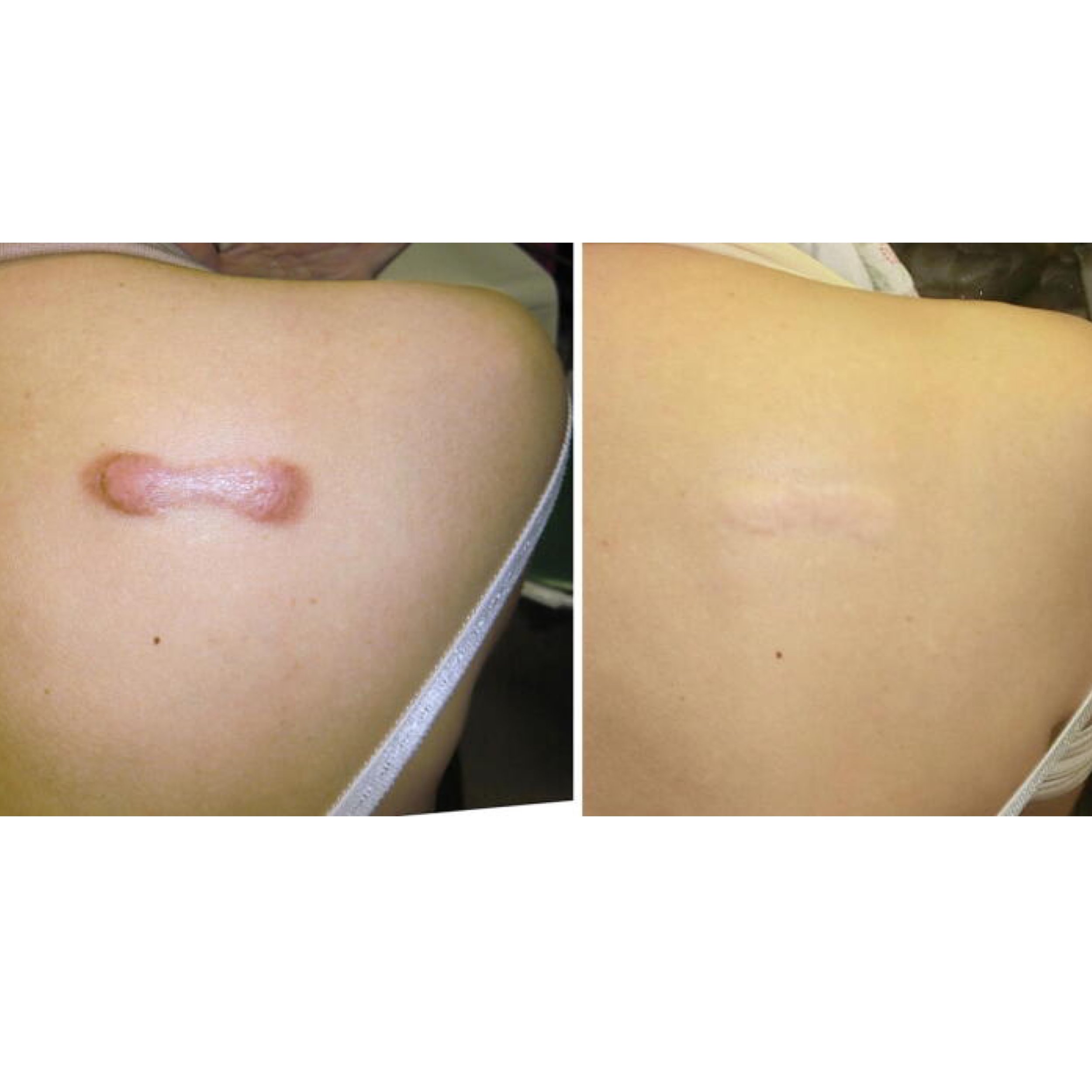 Image 1 of 4
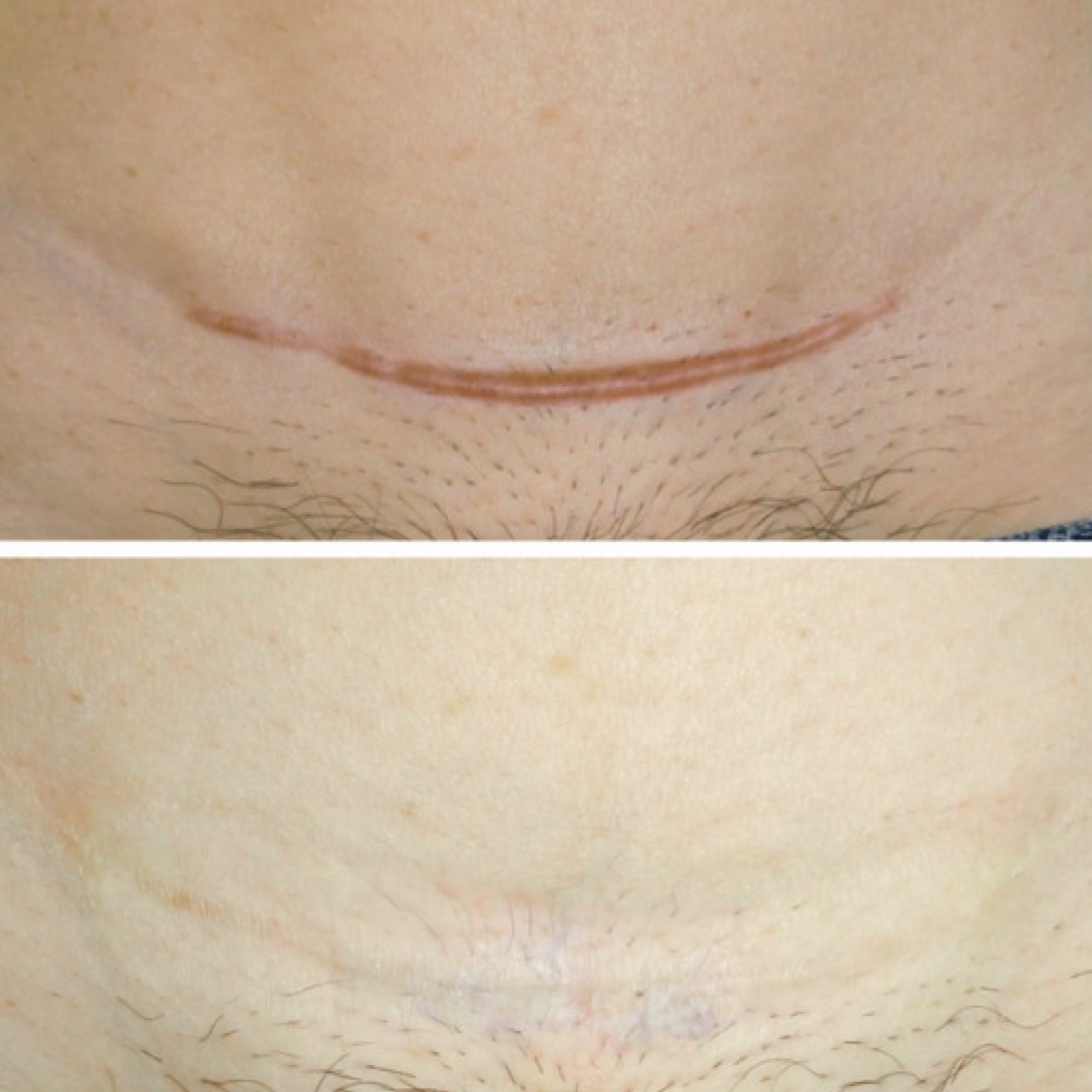 Image 2 of 4
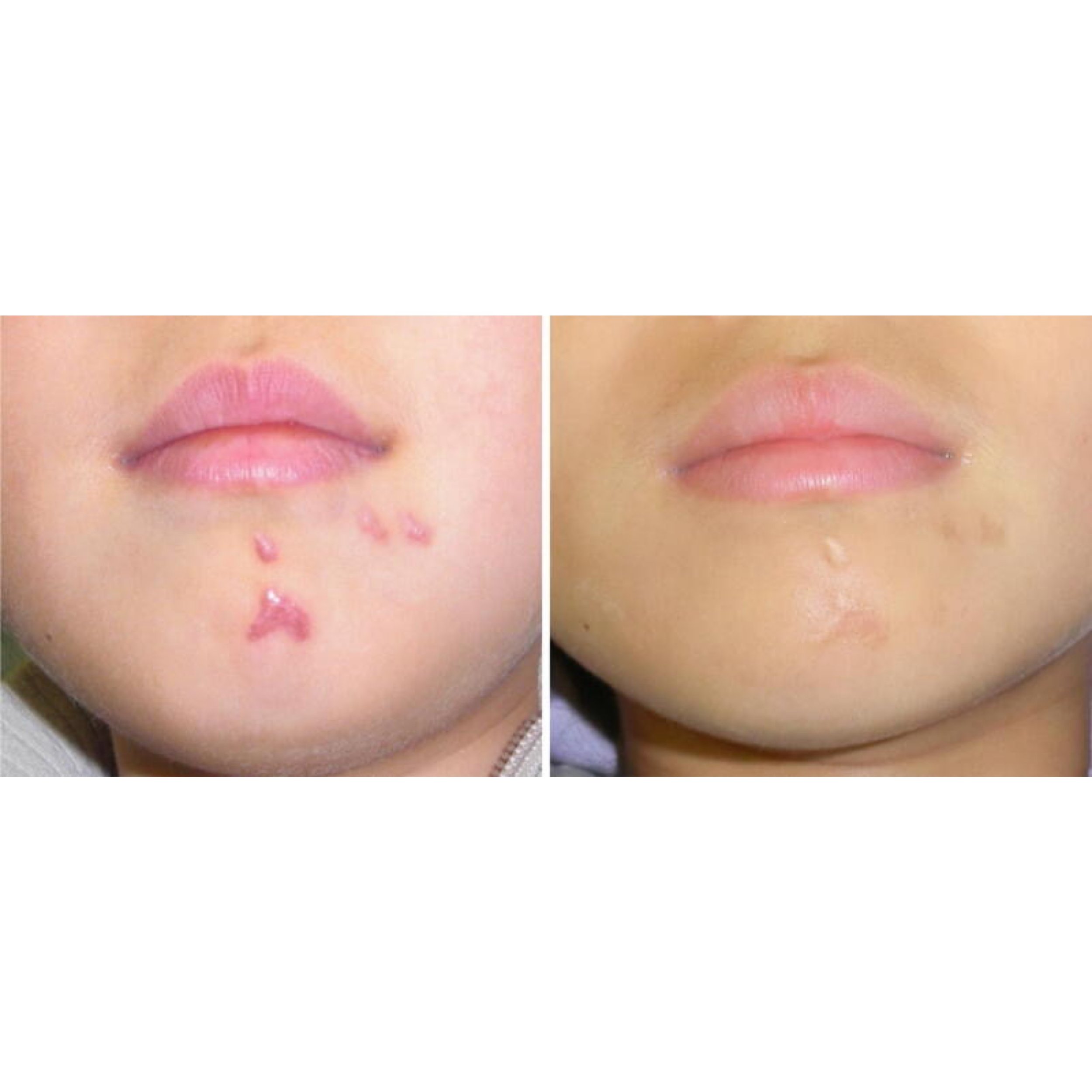 Image 3 of 4
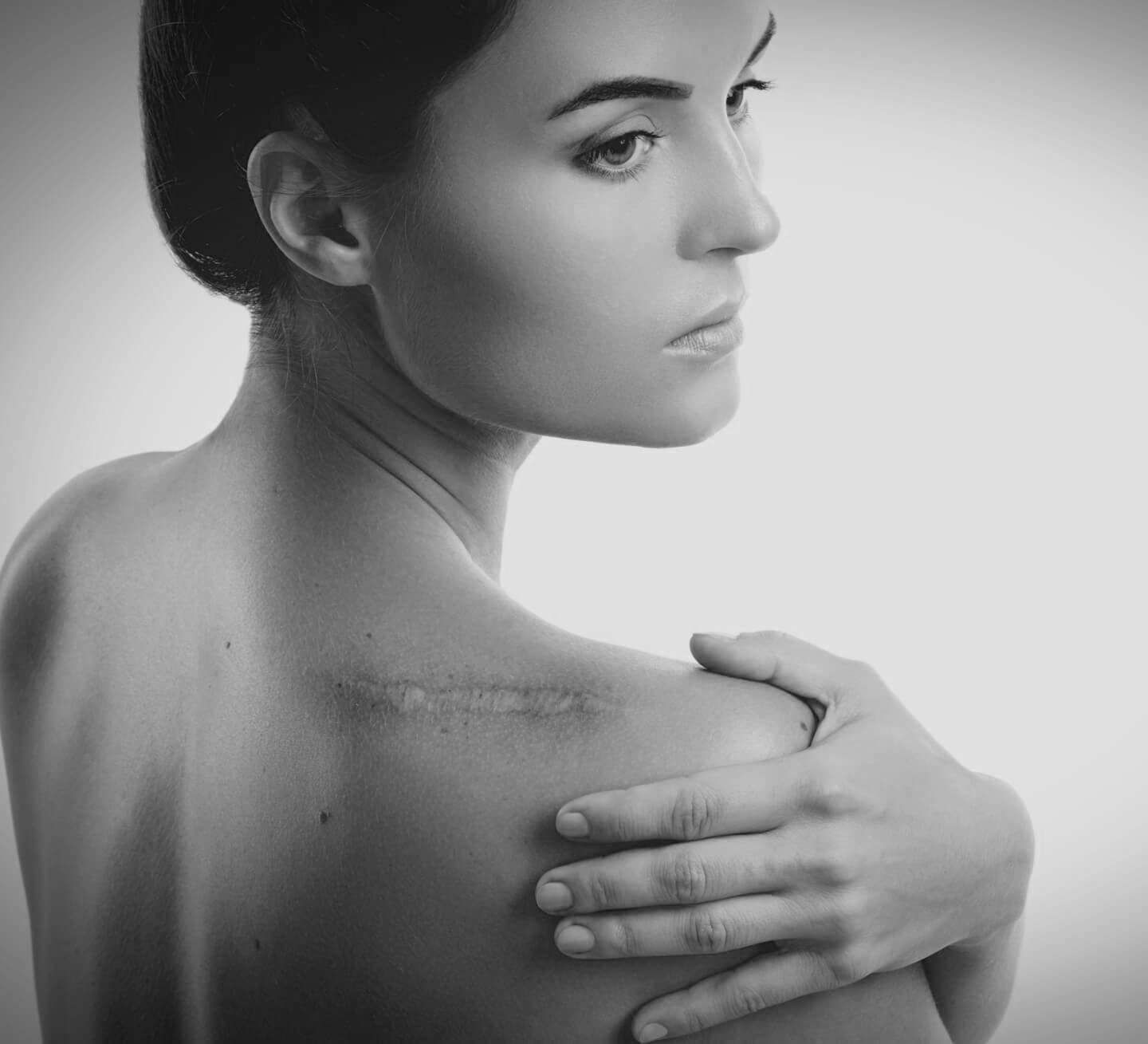 Image 4 of 4